Guide · 8 Feb – 8 Mar 2027
What is Ramadan? Why Muslims fast, iftar and joining in
Ramadan is the ninth month of the Islamic calendar, in which Muslims fast from dawn to sunset, pray more and give to those in need. The fast is broken every evening with an iftar, often shared with others, and the month ends with Eid al-Fitr, Suikerfeest in Dutch. In 2027 it is expected to begin on Monday 8 February.
Updated on Friday 30 October 2026
At a glance
- When
- Expected 8 February to 8 March 2027; each mosque announces its own days
- What
- The ninth month of the Islamic calendar: fasting from dawn to sunset
- At the end
- Eid al-Fitr, Suikerfeest in Dutch
- Who fasts
- Muslims from puberty; not those who are ill, pregnant or travelling
- Iftar
- The meal that breaks the fast at sunset, starting with a date and water
- As a guest
- Open iftars welcome everyone, fasting or not
- Greeting
- Ramadan Mubarak (blessed) or Ramadan Kareem (generous)
Expected Monday 8 February to Monday 8 March 2027; each mosque announces its own days, by calculation or by sighting the new moon.
What is Ramadan?
Ramadan is the ninth month of the Islamic calendar and the holiest month for Muslims. They believe it is the month in which the first verses of the Quran were revealed to the Prophet Muhammad. For the whole month, Muslims who are able fast from dawn to sunset.
The Islamic calendar follows the moon, not the sun, so Ramadan begins when the new moon is seen and lasts 29 or 30 days. Because a lunar year is shorter than ours, the month falls a little earlier in the Gregorian calendar every year.
The word itself comes from a root for scorching heat. It is read as a picture too: like clay under heat, a person is meant to be reshaped by the month, through more prayer, more time with the Quran and giving to those in need.
Why do Muslims fast?
Fasting (sawm) is one of the five pillars of Islam and is prescribed in the Quran, in the second chapter. The first reason Muslims give is obedience to that command: the Quran (2:183) says fasting was prescribed so that believers grow in taqwa, a constant awareness of God.
The second reason is what hunger teaches: self-discipline, patience, gratitude and a feel for what it is to be hungry every day. That is why Ramadan is also the month of giving. Zakat, the obligatory alms, is another pillar, and many Muslims give theirs in this month.
Not everyone fasts. Muslims start at puberty, so young children do not take part. Exempt, among others, are the sick, pregnant women, women who are menstruating or breastfeeding, and travellers going further than 80 kilometres. Missed days are made up later; anyone who cannot make them up feeds a person in need for each day missed.
A day in Ramadan
The day starts before dawn with suhoor, an early meal that works like a breakfast. Then come the morning prayer and the fast, which lasts until sunset. In that time Muslims do not eat, drink or smoke, and they avoid sex. They also avoid gossip, lying and swearing: the fast is about behaviour as much as food.
Muslims pray more in this month and read the Quran, many with the aim of finishing it by the end. In the evening many go to the mosque for taraweeh, extra night prayers with recitation from the Quran.
The last ten days are especially significant. They hold Laylat al-Qadr, the night of power, remembered as the night the Quran's revelation began. Muslims believe the night brings extra blessing and forgiveness, and many give more time to prayer and Quran reading.
What is an iftar?
Iftar is the meal that ends the fast, right after sunset. The first bite is customarily a date, taken with water, in the way the Prophet is said to have done, and then comes the meal itself. For many Muslims it is the meal of the day to share, at home with family and with guests.
What is on the table depends on the family. In Morocco the evening meal is called ftour. Many Moroccan families open it with a date and a few sips of water, then harira, a soup with lentils, chickpeas and tomato. Chebakia, a fried sesame pastry glazed with honey, and sellou, a sweet made from flour and almonds, are served at most iftars.
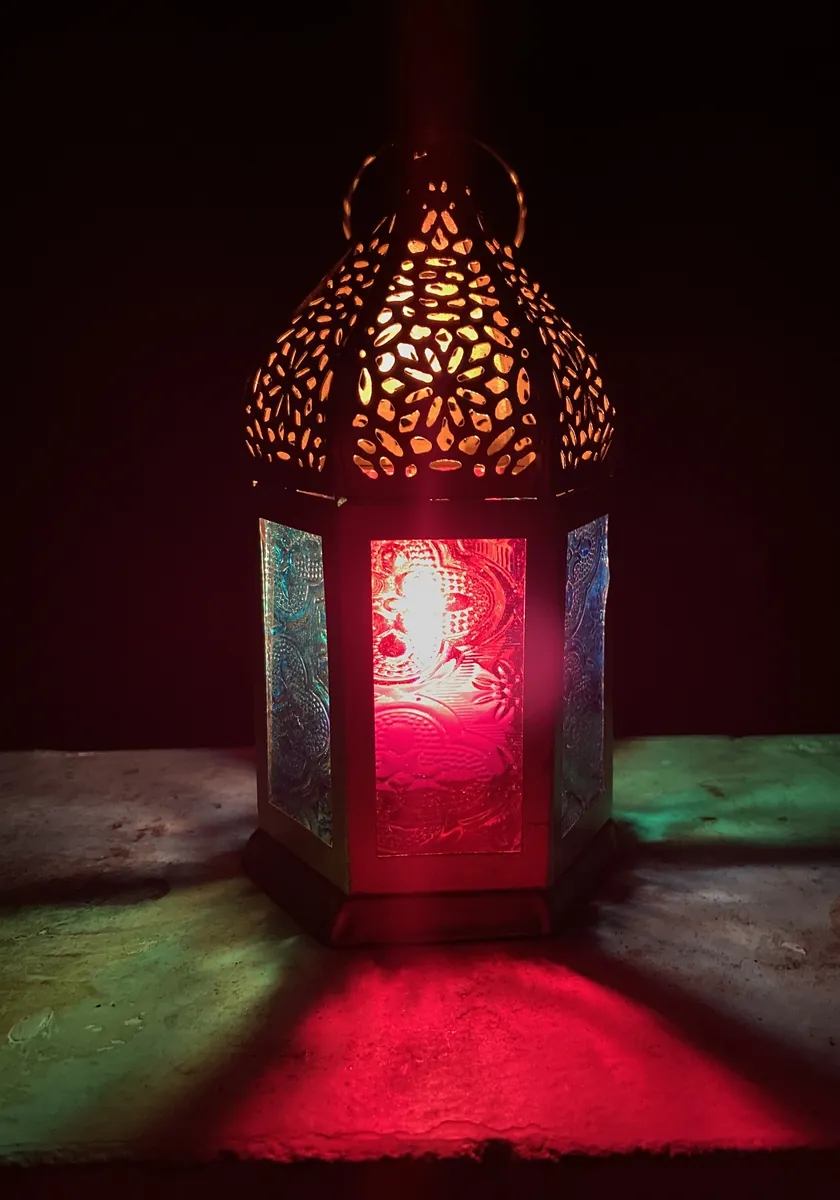
In Egypt the streets light up in Ramadan with fanous lanterns, and children hope for a new one each year. In countries where most people fast, such as Egypt and Saudi Arabia, shops can be closed in the daytime and daily life moves to the evening.
How to join an iftar as a guest
You do not have to be Muslim to share an iftar, and nobody expects a guest to fast. Dutch organisers have invited neighbours, students and the curious for years.
Neighbourhood centres: the Westwijk community centre in Vlaardingen has held its neighbourhood iftar nine times. You register, and the hall holds up to 100 guests.
Schools and universities: Hogeschool Rotterdam held an open iftar in February 2026, open to everyone.
Cultural venues: Studio de Bakkerij in Rotterdam held a family iftar in March 2026, with tickets on a pay-what-you-can basis from €5.
Town halls: some municipalities host one, but it can be by invitation. Rotterdam's iftar in the town hall in 2026 had about 130 invited guests.
Check the organiser's page: some iftars are free, some ask you to book. The meal starts at sunset, so be there in time. Iftars in the Ramadan weeks of 2027 are listed below as organisers announce them, and the Ramadan 2027 page has the sunset times for the big cities.
If a Muslim friend invites you home, no gift is expected, though a small pot of dates is a good thing to bring. Arrive at the agreed time rather than early, because the host is still cooking, and dress modestly. The meal may pause for prayer; take your cue from the host.
Ramadan in the Netherlands
Not every Muslim in the Netherlands starts on the same day. Dutch Muslims follow three different lunar calendars. Turkish mosques follow the calculated calendar of the Turkish religious authority Diyanet. Part of the Moroccan-Dutch community waits for the moon to be seen from Morocco, so the day is known only the evening before, and many other Moroccan-Dutch Muslims follow Saudi Arabia's Umm al-Qura calendar. Neighbours can therefore begin and end a day apart, and each mosque announces its own days. The expected days for 2027 are on the Ramadan 2027 page.
The end of the month is celebrated as Eid al-Fitr, known in the Netherlands as Suikerfeest. Some Muslims would rather say Eid, because the Dutch name is only about the sweets and says nothing of what the festival means to them.
The Turkish community's Ramazan Bayramı, the feast at the end of the month, has its own page among Evenitto's Turkish events.
What non-Muslims can do
Non-Muslims do not have to fast, though some choose to join in. Muslims generally like questions asked with respect. Colleagues and friends may have less energy in the first days, and it is a courtesy to ask before eating at your desk in front of someone who is fasting, though some will not mind. If you want to talk about the month, wait until after they have broken the fast.
A greeting is welcome. "Ramadan Mubarak" means blessed Ramadan and "Ramadan Kareem" generous Ramadan; either is fine, and Muslims greet each other with both. At the end of the month the greeting is "Eid Mubarak".
Ramadan events
No Ramadan event is announced in the Netherlands yet. They appear here as soon as organisers announce them.
أسئلة
Questions
What does Ramadan Mubarak mean, and Ramadan Kareem?
Ramadan Mubarak is Arabic for "blessed Ramadan" and Ramadan Kareem for "generous Ramadan". Both are used as greetings during the month and either is fine for a non-Muslim to say. A fitting reply to Ramadan Kareem is Allahu Akram, "God is more generous". At the end of the month Muslims say Eid Mubarak, "blessed festival".
Can I eat or drink in front of someone who is fasting?
Non-Muslims do not have to fast. Muslims differ in how they feel about it: some would not be offended if someone ate in front of them, but it is polite to ask first. People may also be tired in the first days of the month, so it is kind to keep important questions and heavy meetings for later.
Who does not have to fast, and do children fast?
Muslims start fasting at puberty, so young children do not fast. Exempt, among others, are the sick, pregnant women, women who are menstruating or breastfeeding, and travellers going further than 80 kilometres. Missed days are usually made up later, or compensated with a meal for someone in need.
What is suhoor?
Suhoor (also written suhur) is the early meal Muslims eat before dawn, before the fast begins. It works like a breakfast and is followed by the morning prayer. The other meal of the day is the iftar at sunset.
What are taraweeh and Laylat al-Qadr?
Taraweeh are extra evening prayers during Ramadan, with the Quran recited. Laylat al-Qadr, the night of power, falls in the last ten days. It is remembered as the night the Quran's revelation began, and Muslims believe it brings extra blessing, so many pray and read more.
What is the difference between Ramadan and Suikerfeest?
Ramadan is the month of fasting. Suikerfeest, or Eid al-Fitr, is the festival at the end, the feast of breaking the fast. It begins with the Eid prayer at the mosque; then families and friends visit, share a meal and many wear their best clothes. Giving zakat al-fitr, an obligatory alms, is part of it. Some Muslims prefer Eid to the Dutch name Suikerfeest.
Can I go to an iftar if I am not Muslim?
Yes, at iftars that are open to everyone, such as the open iftar Hogeschool Rotterdam held in 2026. Check the organiser's page for whether you need to register, and at someone's home wait for an invitation.
How long does Ramadan last?
29 or 30 days, depending on the moon: the month begins once the new moon is seen and ends the same way. Because mosques decide how to follow the moon, people in the same city can begin on different days.
Sources
Every fact in this guide comes from one of these pages.
- IslamicFinder: Ramadan 2027
- Wat is de ramadan? (NPO Kennis)
- Wat je moet weten over Ramadan (Hogeschool Rotterdam)
- Newsweek: Ramadan Mubarak meaning and why some say Ramadan Kareem
- Interfaith America: What is Ramadan? Your guide for supporting Muslim colleagues
- Waarom vasten moslims tijdens de Ramadan? (Stichting Al-Ayn)
- Muslim Life, Wake Forest University: What is Ramadan?
- A Very Moroccan Ramadan: Harira, Dates and Chebakia Galore (Morocco World News)
- Ramadan Lanterns Brighten Egyptians' Holy Month (VOA)
- Iftar (Wijkcentrum West, Vlaardingen)
- Dadels Delen, een iftar voor alle leeftijden (Studio de Bakkerij)
- Zo verliep de bekritiseerde iftar op het Rotterdamse stadhuis (Rijnmond)
- The National: Ramadan etiquette for non-Muslims
- Tussen traditie en wetenschap: wanneer begint de Ramadan? (Universiteit Utrecht)
- Islamic Calendar 2028 (IslamiCity)