Guide · 28 Oct – 7 Nov 2026
Holland Gnawa Festival 2026 in The Hague dates, programme and tickets
The eighth Holland Gnawa Festival runs from Wednesday 28 October to Saturday 7 November 2026 in The Hague. Concerts are spread over theatres and stages across the city, with a free Gnawa parade on Sunday 1 November and Gnawa Diffusion closing the festival at Amare on 7 November. You book each concert with the venue that hosts it.
Updated on Friday 30 October 2026
At a glance
- When
- Wednesday 28 October to Saturday 7 November 2026 (8th edition)
- Where in the Netherlands
- The Hague: Koninklijke Schouwburg, Theater aan het Spui, PAARD, Amare, Korzo, Theater De Regentes and Juliana Plaza. One concert on 1 November is at ZOJazz Stage in Amsterdam.
- Closing night
- Gnawa Diffusion, Saturday 7 November, 19:45, Amare
- Organiser
- Stichting MJG (Multicultureel Jongerengeluid), with PAARD, Korzo, Theater De Regentes, Amare, Het Nationale Theater and ProJazz
- Also called
- Gnawa Festival Den Haag, Holland Gnawa Festival; Gnawa is also spelled Gnaoua
- Entry
- Tickets are sold by each venue. The Gnawa Parade on 1 November is free; the opening on 28 October is by invitation only.
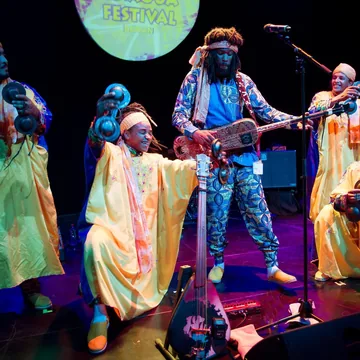
Eighth edition, over several stages in The Hague.
What is Gnawa?
Gnawa is a music and ritual tradition rooted in Morocco. It goes back to enslaved people brought to Morocco; UNESCO ties it to a slave trade that dates to at least the 16th century.
Its songs are mostly religious and address ancestors and spirits, and the core of the tradition is the music of a Sufi brotherhood. In towns, Gnawa musicians lead night-long ceremonies of rhythm and trance meant to heal; these mix African practices, Arab-Muslim influences and Amazigh (Berber) performance. UNESCO listed Gnawa as intangible cultural heritage in 2019.
You will hear the guembri, a stringed instrument, and karkabs, a form of castanets. The Hague festival keeps that core and sets it beside jazz, rock, reggae, electronic music and theatre.
When is the Holland Gnawa Festival 2026?
The 2026 edition runs from Wednesday 28 October to Saturday 7 November 2026. This is the eighth edition. Sunday 1 November is the busiest day, with the free parade and shows from mid-afternoon to late evening.
The previous edition ran from 30 October to 2 November 2025. Dates for a next edition have not been announced.
The programme by day
Wednesday 28 October: a Gnawa Cultural Tour through the Schilderswijk and Transvaal districts at 15:00 (meeting point Stichting MJG, Hoefkade 560), and the official opening at 18:30 at Juliana Plaza, by invitation only.
Thursday 29 October, 20:15: Gnaoua Electro Live at Korzo, with Trans Sahara Electro and Elements of Baraka on one shared ticket.
Friday 30 October: Kalimba Quartet at Theater De Regentes, with a workshop at 19:00, the concert at 20:15 and a jam session at 21:30. The quartet brings guembri player Khalil Mounji with kora player Mbemba Diabaté.
Saturday 31 October, 20:00 to 23:15: Gnawa & Chaabi Royal Night at the Koninklijke Schouwburg, with Maâlem Abdelkebir Merchane and singer and violinist Abdellah Daoudi, one evening on one ticket.
Sunday 1 November: family theatre ANDRS (ages 3 and up) and Rajae El Mouhandiz's work in progress A Love Supreme, both at 15:00 at Theater aan het Spui; the free Gnawa Parade at 14:45 from Theater aan het Spui to the Koninklijke Schouwburg; comedian Hassan El Fad followed by Marmoucha Orchestra and The Super Gnawa Girls at the Koninklijke Schouwburg from 16:15 to 19:00; AGO Gnawa, saxophonist Luc Mishalle with mâalem Driss Filali, at PAARD at 20:00 (doors 19:00); and Farid Ghannam and Gerben van Etten at ZOJazz Stage in Amsterdam at 20:00.
Saturday 7 November, 19:45: the festival ends with Gnawa Diffusion in Amare's Danstheater. Amazigh Kateb's Algerian band, formed in Grenoble in 1992, mixes Gnawa with rock, reggae and rap.
A Gnawa festival in The Hague
The Hague's festival dates from 2019 and is held in the city centre. Besides concerts it has theatre, dance and workshops. Essaouira in Morocco also holds a Gnawa festival; that is a separate event.
Stichting MJG (Multicultureel Jongerengeluid) started the festival and organises it with PAARD, Korzo, Theater De Regentes, Amare, Het Nationale Theater and ProJazz. The organiser says Moroccan culture and African heritage are under-represented on Hague stages and wants to change that. Its Digital Lila project, a collaboration with Gnaoua Culture, includes a Gnawa Talent round: some of the artists at the 2026 opening won it in 2025.
The festival uses these addresses: Koninklijke Schouwburg, Korte Voorhout 3; PAARD, Prinsegracht 12; Amare, Spuiplein 150; Korzo, Prinsestraat 42; Theater De Regentes, Weimarstraat 63; Juliana Plaza, Schalk Burgerstraat 217. The Hague is also called Den Haag.
What to expect
This is a programme of separate concerts rather than a festival site: each evening is at a different stage, and the line-up ranges from traditional Gnawa masters to electronic and jazz crossovers. Elements of Baraka, for instance, adds dub and techno to the rhythms and chants of Gnawa and Sufi hadra.
Some programmes are long. The Royal Night on 31 October runs from 20:00 to 23:15 with an interval, and the Sunday afternoon programme at the Koninklijke Schouwburg takes almost three hours. Doors and start times differ per venue, so check the time on your ticket.
Hassan El Fad's show on 1 November is in Moroccan Arabic. That Sunday is also the day of The Hague marathon, so the city is busy and bus and tram routes are diverted: allow extra time.
There are options for families and for walk-ins: the parade is free and open to everyone who wants to join in, and ANDRS on 1 November is made for children aged 3 and up.
Tickets and how to join
The festival does not sell tickets itself. Every concert is booked with the venue that hosts it, through the links on the programme page, and the venue sets prices, ticket types and conditions. If a concert has no link yet, its ticket sale has not been announced; that does not mean it is sold out.
The Gnawa Parade on 1 November costs nothing: musicians set off from Theater aan het Spui and walk through the centre to the Koninklijke Schouwburg, and you can fall in behind them. The opening on 28 October is by invitation only.
Need a wheelchair space, a step-free entrance or a seat for a companion? Ask the venue before you book. Questions about the festival itself go to Stichting MJG at [email protected].
Gnawa Festival events
Events in the Arabic programme that belong to this season, 29 Oct – 9 Nov.
October 2026
- Fri 30 Oct 20:15Kalimba Quartet: Khalil Mounji & Mbemba DiabatéTheater De Regentes · Den Haag€10Tickets
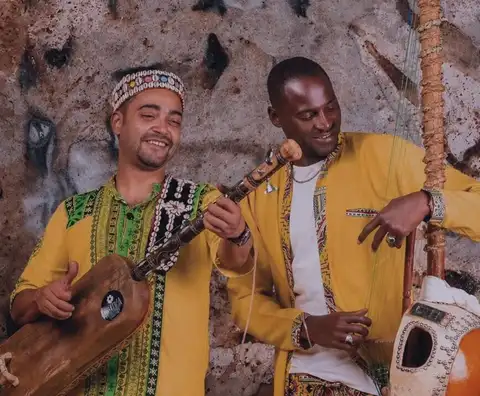
- Sat 31 Oct Gnawa Festival: Maâlem Abdelkebir Merchane & Abdellah DaoudiHet Nationale Theater · Den HaagTickets
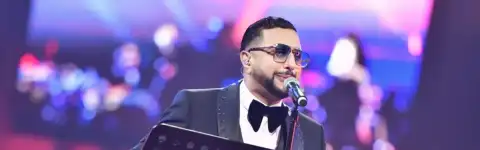
- Sat 31 Oct 20:00Gnawa & Chaabi Royal Night — with Maâlem Abdelkebir Merchane and Abdellah DaoudiKoninklijke Schouwburg · Den Haag€11Tickets

- Fri 30 Oct 20:15Kalimba Quartet: Khalil Mounji & Mbemba DiabatéTheater De Regentes · Den Haag€10Tickets
November 2026
- Sun 1 Nov 14:45Gnawa Parade — Musical parade through the center of Den HaagTheater aan het Spui · Den HaagTickets

- Sun 1 Nov 16:15Hassan El Fad — With Marmoucha Orchestra & The Super Gnawa GirlsKoninklijke Schouwburg · Den Haag€29Tickets

- Sun 1 Nov 20:00AGO GNAWA – GNAWA FESTIVAL 2026PAARD · Den Haag€23.50Tickets
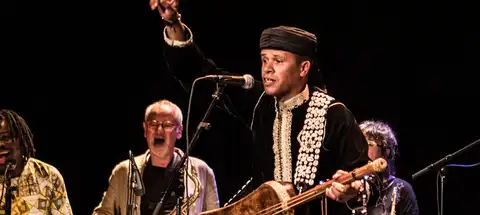
- Sun 1 Nov 20:00ZOJazz Stage x Rabobank • 2Gether@Sunday • Farid Ghannam & Gerben van Etten • JammsessionZOJazz Stage · AmsterdamTickets

- Sat 7 Nov 19:45Gnawa Festival 2026Amare · Den Haag€20Tickets
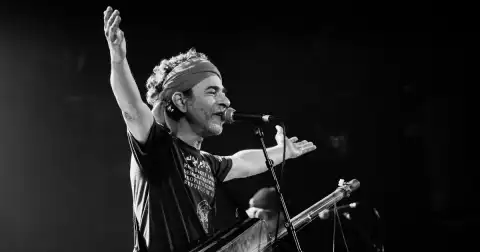
- Sun 1 Nov 14:45Gnawa Parade — Musical parade through the center of Den HaagTheater aan het Spui · Den HaagTickets
أسئلة
Questions
When is the Gnawa Festival in The Hague in 2026?
From Wednesday 28 October to Saturday 7 November 2026. The parade and most concerts are on Sunday 1 November, and Gnawa Diffusion closes the festival on 7 November at Amare.
Where does the Holland Gnawa Festival take place?
At several stages in The Hague: Koninklijke Schouwburg, Theater aan het Spui, PAARD, Amare, Korzo, Theater De Regentes and Juliana Plaza. The concert by Farid Ghannam and Gerben van Etten on 1 November is at ZOJazz Stage in Amsterdam-Zuidoost.
Is the Gnawa Parade free?
Yes, it costs nothing. On Sunday 1 November it leaves Theater aan het Spui at 14:45 and ends at the Koninklijke Schouwburg; you can walk along behind the musicians.
Where do I buy tickets for the Gnawa Festival?
Directly from the venue that hosts the concert, through the ticket links on the festival's programme page. Prices and conditions are set by each venue.
Is this the same as the Gnawa festival in Essaouira?
No. Essaouira holds its own Gnawa festival in Morocco every year. The Hague festival is a separate event, started by Stichting MJG, and has taken place in the city since 2019.
What is the Gnawa & Chaabi Royal Night?
A joint evening on Saturday 31 October at the Koninklijke Schouwburg: Gnawa from Maâlem Abdelkebir Merchane in the first half, chaâbi from Abdellah Daoudi and Marmoucha Orchestra in the second.
What is Gnawa music?
A music and ritual tradition rooted in Morocco, in which African practices, Arab-Muslim influences and Amazigh (Berber) performance come together. UNESCO listed it as intangible cultural heritage in 2019.
Sources
Every fact in this guide comes from one of these pages.
- Holland Gnawa Festival 2026 (gnawafestival.nl)
- Holland Gnawa Festival: practical information
- Holland Gnawa Festival 2026: programme and tickets (English)
- Holland Gnawa Festival: archive 2025
- Gnawa Diffusion at Holland Gnawa Festival 2026
- Holland Gnawa Festival: organisation
- Het Nationale Theater: Gnawa Festival 2026
- UNESCO: Gnawa (Representative List, 2019)
- Het Nationale Theater: Gnawa & Chaabi Royal Night
- Het Nationale Theater: Hassan El Fad