Industriemuseum Freudenthaler Sensenhammer in Leverkusen
Industriemuseum Freudenthaler Sensenhammer in Leverkusen-Schlebusch is a preserved scythe factory where working 1960s hammers, guided tours and concerts in the historic forge hall bring the history of tool-making to life.
Photo credits
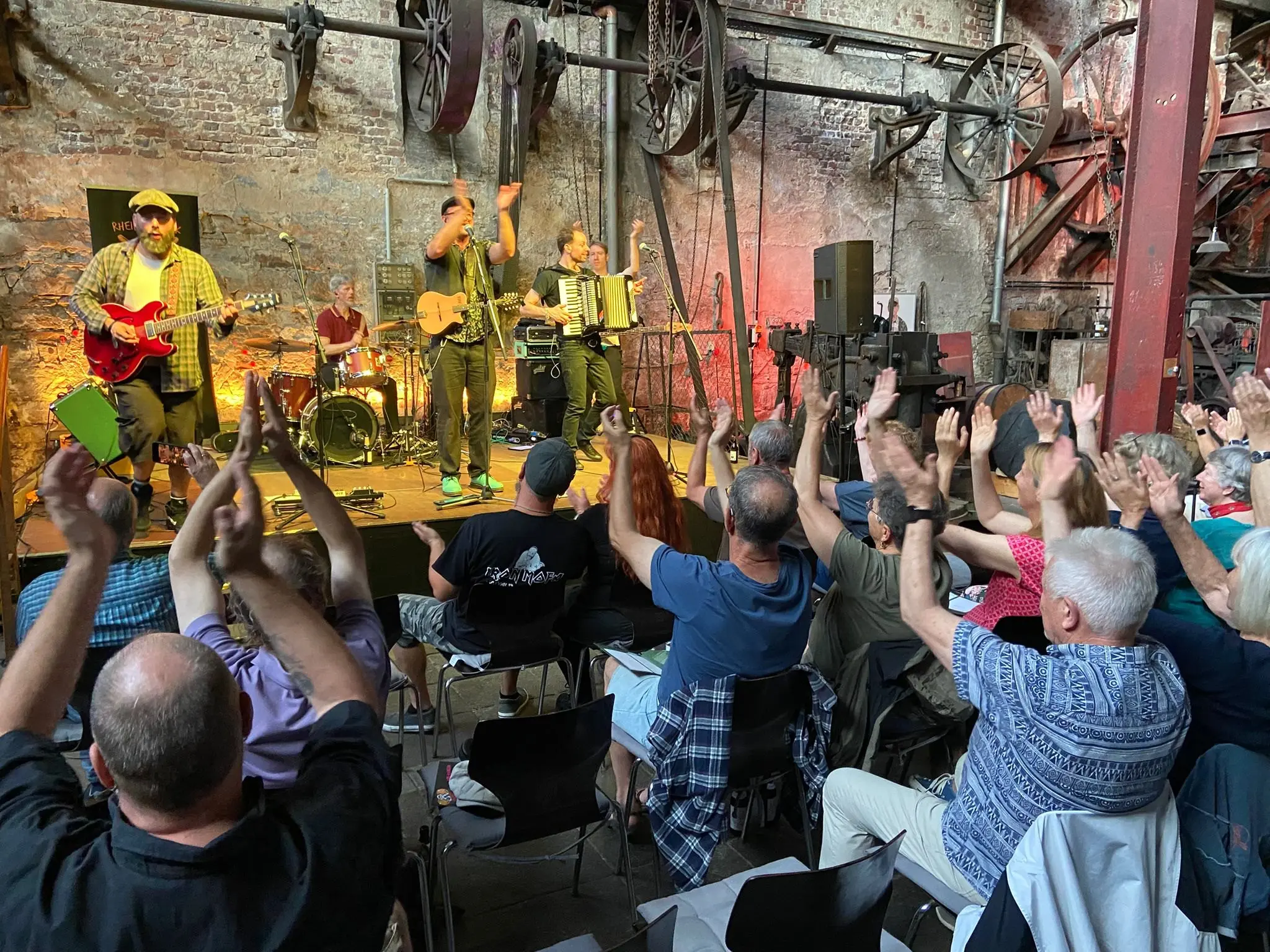
A concert in the historic forge hall of Freudenthaler Sensenhammer, with the audience seated among the old forging hammers.: Industriemuseum Freudenthaler Sensenhammer
Quick answers
- Opening
- Tue/Thu 10:00-13:00, Wed 15:00-18:00, Sat/Sun 12:00-17:00
- Address
- Freudenthal 6851375 Leverkusen
- Admission
- Adults €5, children €3, family €10
- Capacity
- Not published; partly seated concerts
- Parking
- Hammerweg car park, about 100 m away
- By bus
- Von-Diergardt-Straße stop, about 10 min on foot
- Access
- Forge hall by ramp with advance notice
- Typical concert
- Doors 19:00, start 20:00, end about 22:00
- Contact
- 0214 5007268
Industriemuseum Freudenthaler Sensenhammer agenda: upcoming events
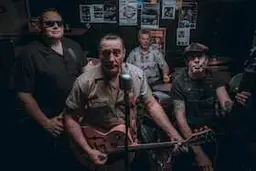
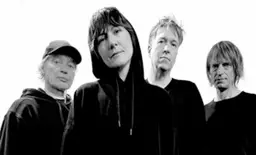
Tonight, this week and the months ahead at this venue in Leverkusen.

Plan your visit to Industriemuseum Freudenthaler Sensenhammer
How many people fit in the Sensenhammer?
The museum publishes no building capacity; concerts use partly seated, free-choice admission.
- Concert seating
- Free choice of seats, partly seated; no seat guarantee
- Forging demonstration
- Maximum 20 participants per showing
- Where the audience sits
- Inside the machine hall, among the hammers and workbenches
No seat count for the factory or the forge hall has been published. Concert listings state 'free choice of seats, partly seated, no seat guarantee', so arrive early if you want a seat. A public forging demonstration takes at most 20 participants, and visitors watch from inside the machine hall, surrounded by the hammers and old workbenches.
| Venue | Capacity | Source |
|---|---|---|
| Industriemuseum Freudenthaler Sensenhammer | Not published | Official site |
| Ostermann-Arena, Leverkusen | 3,500 people | wikidata.org/entity/Q871510 |
| Ulrich-Haberland-Stadion, Leverkusen | 3,200 people | wikidata.org/entity/Q1621482 |
How a visit to the Sensenhammer works
From the car park to the forge hall and back to the shop.
- Check the day first. The museum opens Tuesday and Thursday 10:00-13:00, Wednesday 15:00-18:00 and Saturday and Sunday 12:00-17:00; hours can change when an event is on.
- Pay at the entrance: adults €5, children aged 6-16 €3, reduced €3, family ticket €10. Under-sixes enter free and EVL card holders pay €3 (children free).
- Pick up the short flyer at the entrance. The volunteer cash-desk team is there for questions, and a gallery and museum shop sit in the entrance area.
- Start upstairs in the permanent exhibition on the history of scythes and sickles and the Kuhlmann factory, then go down to the original production halls.
- Walk the hardening, straightening, grinding and polishing rooms and the forge with its rows of hammers and visible shaft drives. Allow at least 45 minutes.
- If a demonstration is on, arrive early: forging showings take at most 20 people and last about an hour with a guided tour.
Opening hours, tickets and visitor information
The museum is open five days a week, with short weekday sessions and longer weekend hours.
Opening hours can vary when concerts, exhibitions or workshops are on, so check the official calendar before you travel. Tickets for events are sold in advance at the museum cash desk and online. The cash desk team is made up of volunteers, and the entrance area holds a gallery and a museum shop.
- Guided tours
- Book by email to info@sensenhammer.de; times outside opening hours by arrangement
- Telephone
- 0214 5007268
- info@sensenhammer.de
- Safety on site
- Uneven floors, steep stairs and low railings; hot steel and sparks at demonstrations
| Ticket or day | Price or time |
|---|---|
| Adult | €5 |
| Child (6-16) | €3 |
| Reduced | €3 |
| Family ticket | €10 |
| Under six | Free |
| EVL card, adult / child | €3 / free |
| Tuesday and Thursday | 10:00-13:00 |
| Wednesday | 15:00-18:00 |
| Saturday and Sunday | 12:00-17:00 |
Is the Freudenthaler Sensenhammer accessible?
The historic museum is not fully barrier-free, but staff can help you reach the forge hall.
The venue says plainly that the industrial museum is not barrier-free. Contact it by email before your visit and the team will arrange the help you need. The forge hall can be reached by wheelchair over a ramp, but someone must assist; say in advance and help will be provided. For concerts, get in touch beforehand and seats will be reserved and help given on the way into the hall. There is an accessible toilet, and the museum would like to expand its tours for blind and visually impaired visitors.
- Museum building
- Not barrier-free; contact the museum before visiting
- Forge hall
- Wheelchair ramp available, assistance required
- Concerts
- Reserve wheelchair spaces and help on the way in, after advance notice
- Toilet
- Accessible toilet available; ask staff for directions
Getting to Freudenthaler Sensenhammer
Freudenthal 68, 51375 Leverkusen, in the Schlebusch district on the Dhünn.
Parking at the Sensenhammer
The nearest public car parks are a short walk from the museum.
| Car park | Address | Walk | Rate |
|---|---|---|---|
| Hammerweg car park | Hammerweg, 51375 Leverkusen | About 2 min (100 m) | No charge published |
| Marktplatz car park | Marktplatz, 51375 Leverkusen | 12 min (830 m) | No charge published |
- Closest option
- Car park on Hammerweg, on the right about 100 m before the venue
- Address to enter in a navigator
- Freudenthal 68, 51375 Leverkusen
- Accessible arrival
- A non-public street entrance can be used; ask the service team to guide you in
From scythe factory to industrial museum
The first hammer works on the Dhünn was recorded in 1778. From 1837 the Kuhlmann family firm H.P. Kuhlmann Söhne made sickles and scythes here, at its peak up to 200,000 a year. The factory closed in 1987 and the Förderverein Freudenthaler Sensenhammer opened the museum in 2005.
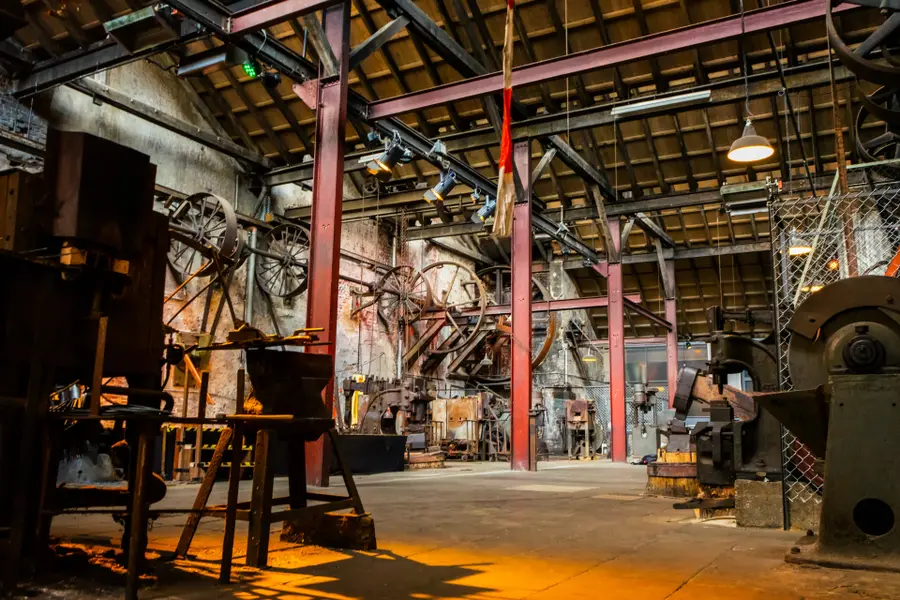
The early industrial plant survives with its production rooms, machines and tools almost intact, which makes the factory itself the museum's largest exhibit. Many machines still work and are started regularly. The permanent exhibition upstairs explains the culture history of scythes and sickles, the Kuhlmann family and the people who worked here; the ground floor follows the process from steel rod to finished tool.
The site is also a cultural venue. The Live@Sensenhammer concert series uses the stage of the historic forge hall, whose audiences sit among the hammers; readings, theatre, exhibitions and the Leverkusen Jazz Days also take place here. The forge hall and the former locksmith's workshop can be hired for seminars and events, but not for private birthday or wedding parties. The museum is an official branch of the Leverkusen registry office for civil weddings.
- Founded
- Hammer works recorded in 1778; scythe production from 1837
- Peak production
- Up to 200,000 scythes a year
- Museum opened
- 2005, after the factory closed in 1987
- Concert series
- Live@Sensenhammer on the forge hall stage
Photos
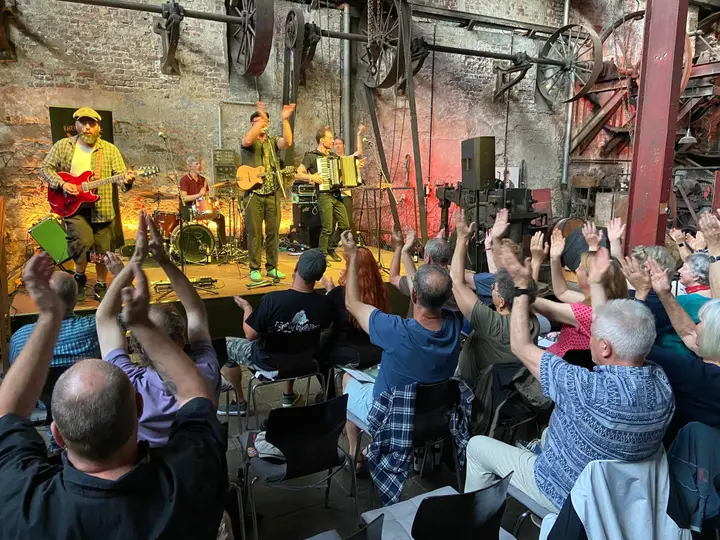
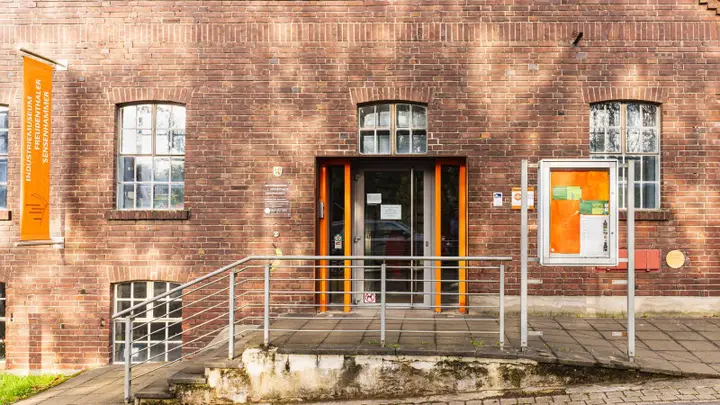
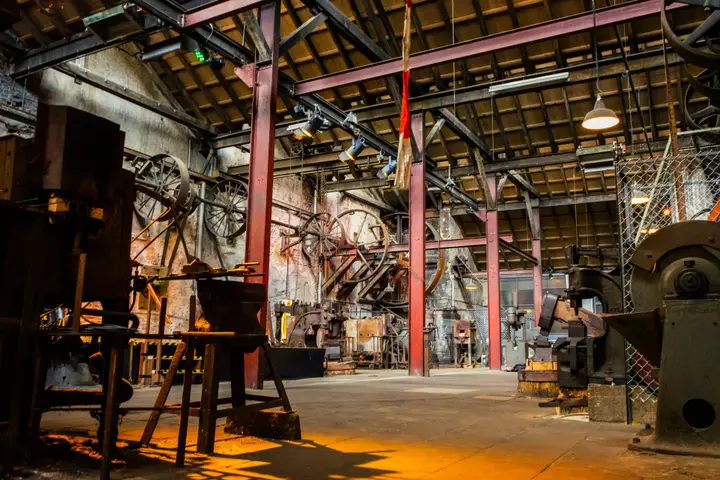
Photo credits
A concert in the historic forge hall of Freudenthaler Sensenhammer, with the audience seated among the old forging hammers.: Industriemuseum Freudenthaler Sensenhammer
The entrance to the Industriemuseum Freudenthaler Sensenhammer in Leverkusen-Schlebusch.: Industriemuseum Freudenthaler Sensenhammer
Interior view of the historic forge hall at Freudenthaler Sensenhammer, with rows of forging hammers and visible shaft drives.: Industriemuseum Freudenthaler Sensenhammer
Read reviews on Google Maps We don't show ratings here. See what visitors say on Google Maps.
Freudenthaler Sensenhammer: questions people ask
What are the opening hours of Industriemuseum Freudenthaler Sensenhammer?
Tuesday and Thursday 10:00-13:00, Wednesday 15:00-18:00, and Saturday and Sunday 12:00-17:00. The museum is closed on Monday and Friday. Hours can vary when a concert, exhibition or workshop is on, so check the official calendar before you travel.
How much does admission cost?
Adults pay €5, children aged 6 to 16 and reduced visitors €3, and a family ticket costs €10. Children under six enter free. EVL card holders pay €3 as adults and children with the card enter free.
How many people fit in the Sensenhammer?
The museum does not publish a capacity for the building or the forge hall. Concerts are partly seated with free choice of seats and no seat guarantee, so arrive early. A public forging demonstration takes at most 20 participants.
How do I get there by public transport?
Take a bus to von-Diergardt-Straße, about a 10-minute walk from the museum; lines 202, 205, 207, 208, 218, 222, 260, N22, N24 and F-MA stop there. From Leverkusen-Manfort station, take bus 207 or 222 to that stop. Leimbacher Hof and Am Märchen are other stops about 7 to 10 minutes away.
Where can I park near the Sensenhammer?
A car park on Hammerweg is on the right about 100 metres before the museum, roughly a two-minute walk. The Marktplatz car park is about 830 metres or a 12-minute walk away. The museum and local tourism site publish no parking charge.
Is the museum wheelchair accessible?
The museum is not fully barrier-free. Contact it by email before your visit: the forge hall can be reached by ramp with assistance, wheelchair spaces at concerts are reserved after advance notice, and an accessible toilet is available.
What time do concerts start and finish?
Evening concerts usually start at 20:00 with doors at 19:00; the Christmas Jazz shows started at 18:00 with doors at 17:00. The venue publishes no end times: allow about two hours, so a 20:00 show typically finishes around 22:00 and an 18:00 show around 20:00. Daytime workshops can start at 10:00.
Do I need a ticket, and how much are concert tickets?
Yes, concerts are ticketed. Recent showings cost €20.80 to €28.50 in advance and €26.30 to €34.00 at the door, plus fees; some sell out well ahead. Buy online or at the museum cash desk. Museum entry is a separate €5.
Can I book a guided tour?
Yes. Email info@sensenhammer.de to book a tour led by a volunteer guide. A tour of the forge, hardening shop, straightening shop and grinding shop starts and ends at the entrance; tours outside the regular opening hours are possible by arrangement. Allow at least 45 minutes.
Are there blacksmithing demonstrations?
Yes. From March to November a public demonstration is offered nearly every month. Historic machines are run with glowing steel, hearing protection is provided, a demonstration is combined with a museum tour, lasts about an hour and takes at most 20 people. Book early at the cash desk or via Reservix.
Can I hold a private celebration or get married there?
The forge hall and former locksmith's workshop can be hired for receptions, seminars, workshops and film shoots, with optional short tours or forging demonstrations. Private parties such as birthdays and wedding receptions are not offered, but the site is an official branch of the Leverkusen registry office and civil weddings take place here at least once a year.
What will I see inside the museum?
Upstairs, the permanent exhibition covers the history of scythes and sickles, the Kuhlmann firm and its workers, including the only female grinder. Downstairs you walk through the Reckerei and the large forge hall with its hammers and shaft drives, plus the hardening, grinding and polishing rooms. A gallery and a museum shop are by the entrance.
Sources: Sensenhammer — Erleben; Wikidata (capacities) (November 22, 2026) · OpenStreetMap, FOSSGIS foot routes; Lust auf Leverkusen (November 22, 2026) · Lust auf Leverkusen — Anfahrt und Parken; OpenStreetMap (November 22, 2026) · Sensenhammer — Preise & Öffnungszeiten (November 22, 2026) · Sensenhammer — visitor information and event pages (November 22, 2026) · Sensenhammer — Erfahren, historische Entwicklung (November 22, 2026)

