Kelvingrove Art Gallery and Museum
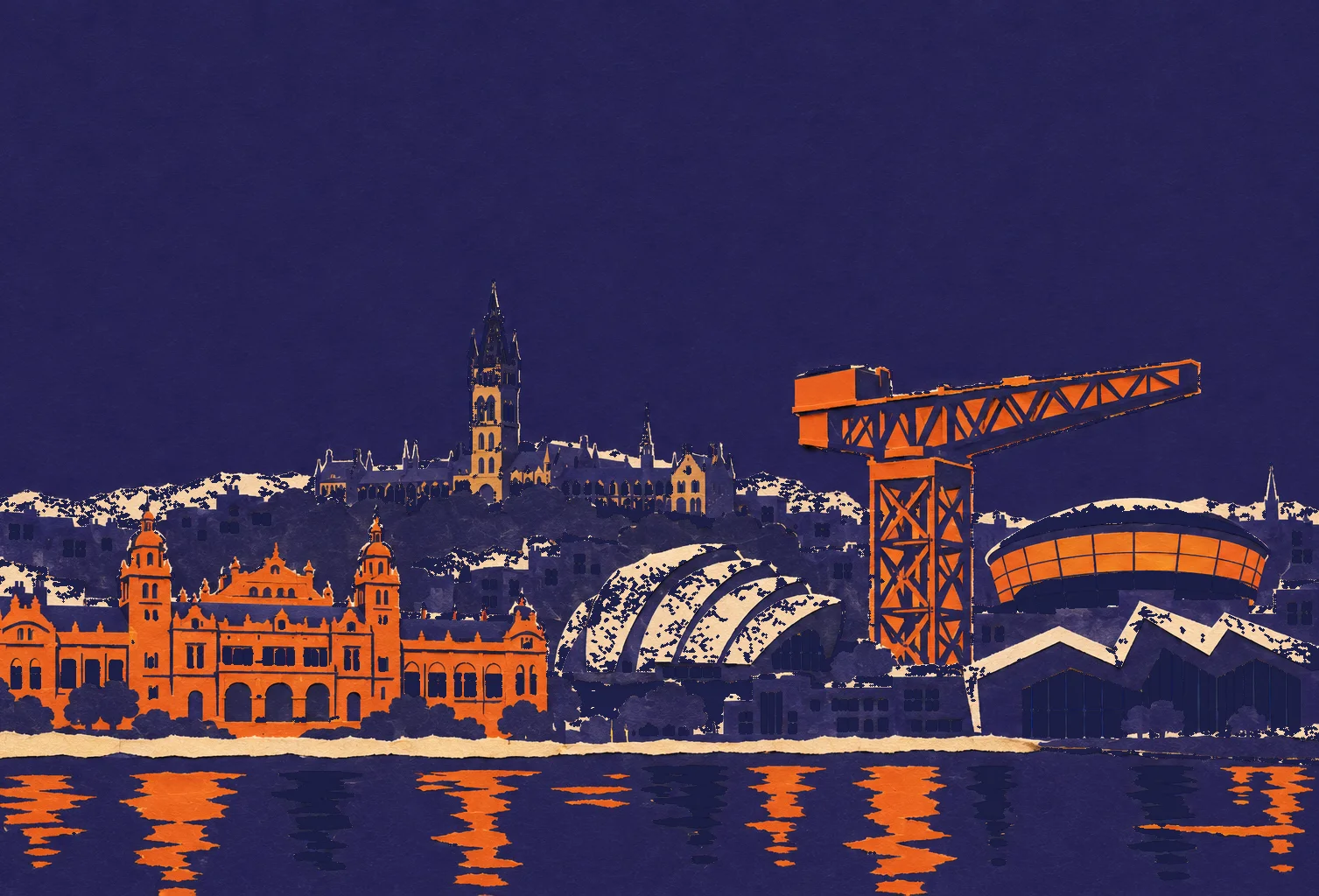
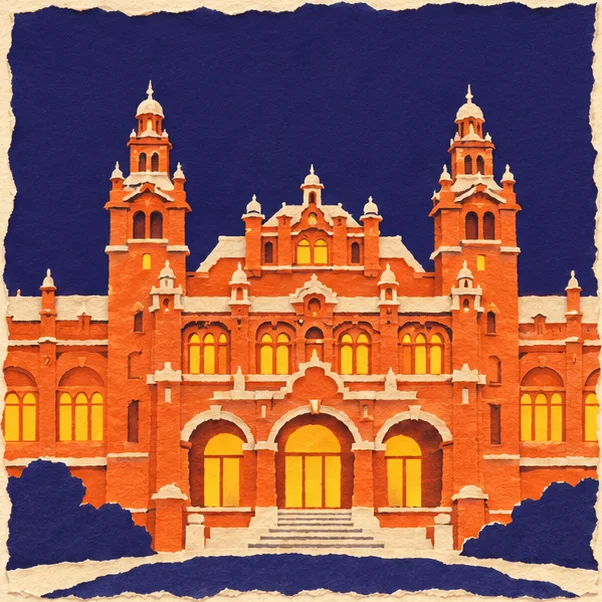
The red sandstone museum with Spanish Baroque towers, built for the 1901 Glasgow International Exhibition and reopened by the Queen in 2006 after a refurbishment. Entry is free. A Spitfire hangs above the west court, Dalí's Christ of St John of the Cross has its own display, and the 1901 organ is played at free recitals.
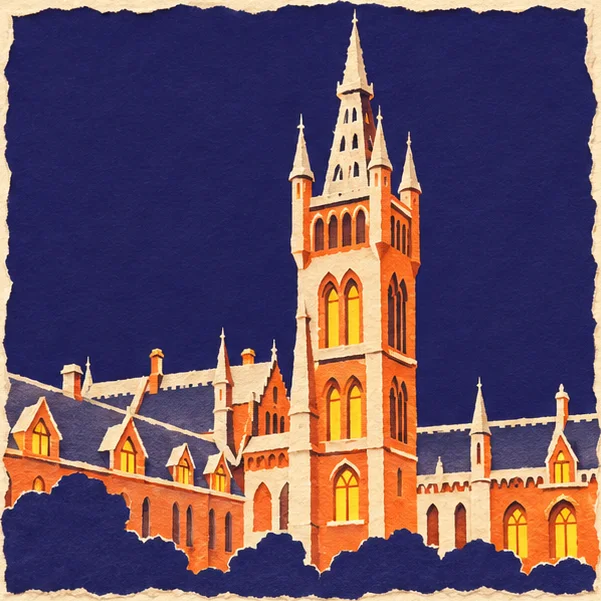
University of Glasgow
Scotland's second-oldest university, founded in 1451, moved to Gilmorehill in 1870. George Gilbert Scott designed the Gothic main building, and his son John Oldrid Scott completed it with the tower and spire, about 85 metres high. The Hunterian, which calls itself the oldest public museum in Scotland, is part of the campus.
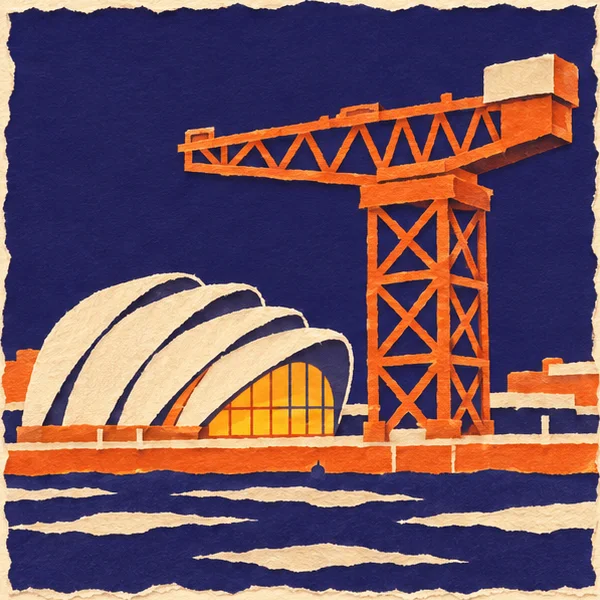
Finnieston Crane
A giant cantilever crane on the north bank of the Clyde, finished in 1931 to lift locomotives and heavy engines onto ships. It stands 53 metres tall with a 46-metre jib, is Category A listed and is one of four such cranes left on the river. The curved Armadillo hall of the Scottish Event Campus is next to it.
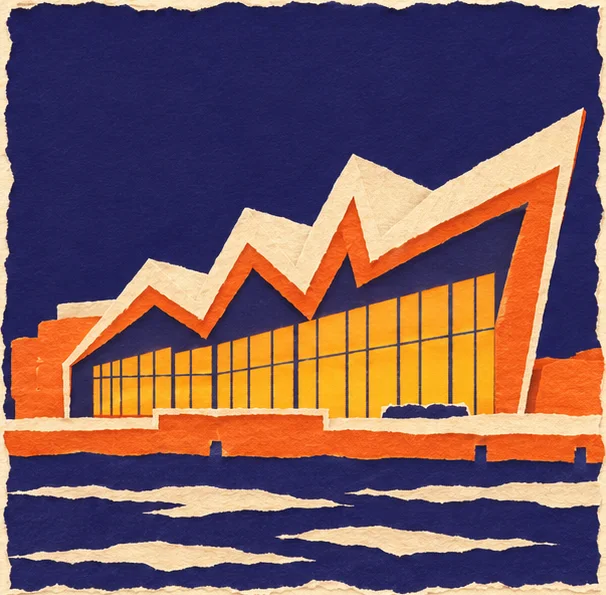
Riverside Museum
Glasgow's transport museum, in a zigzag building by Zaha Hadid that opened in June 2011 on the Clyde. Entry is free. The collections follow the city's shipbuilding and train-making, and a street of shops, houses and a subway station has been rebuilt inside. The Tall Ship Glenlee, launched in 1896, is moored outside.
The Burrell Collection
The collection of the shipping owner Sir William Burrell and his wife Constance, given to the city in 1944 and shown since 1983 in a museum in Pollok Country Park. It reopened on 29 March 2022 after a refurbishment, with Chinese ceramics, medieval stained glass and Impressionist paintings. Entry is free.
Glasgow Cathedral
The medieval cathedral of St Mungo, the city's patron saint. The Lower Church, a 13th-century crypt, holds his shrine, and the building came through the Reformation almost intact. Entry is free, with donations welcome; as a working church it can close for services and events.
Glasgow Necropolis
Outdoors
The Victorian cemetery on the hill east of the cathedral, laid out in 1832 and opened in 1833. Monuments cover the slopes, and a column with a statue of John Knox stands at the top. It is a walk in the open air, with views back over the city.