Royal Pavilion
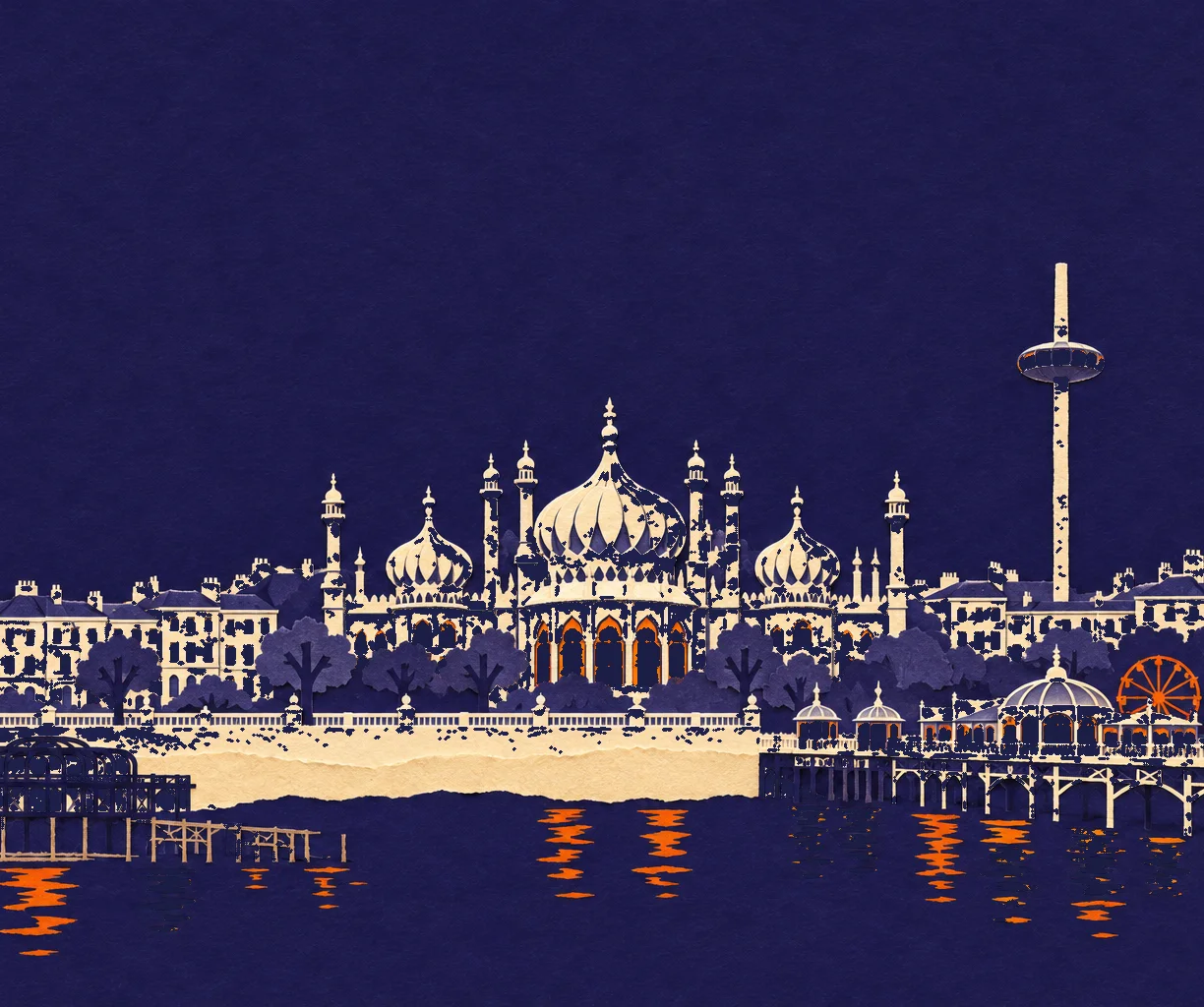
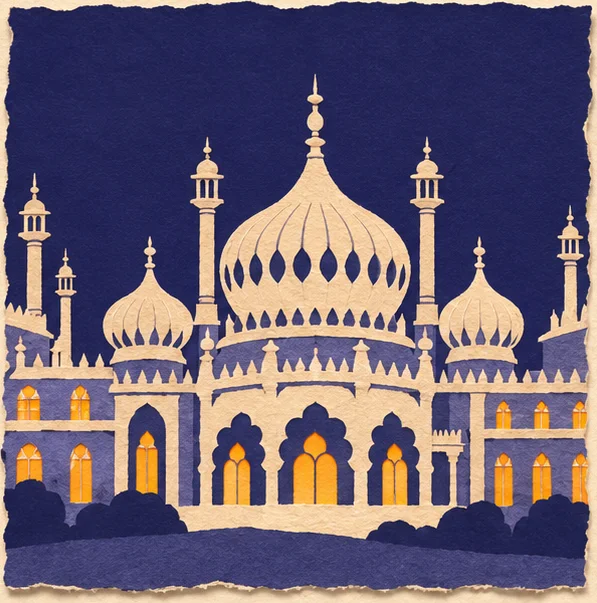
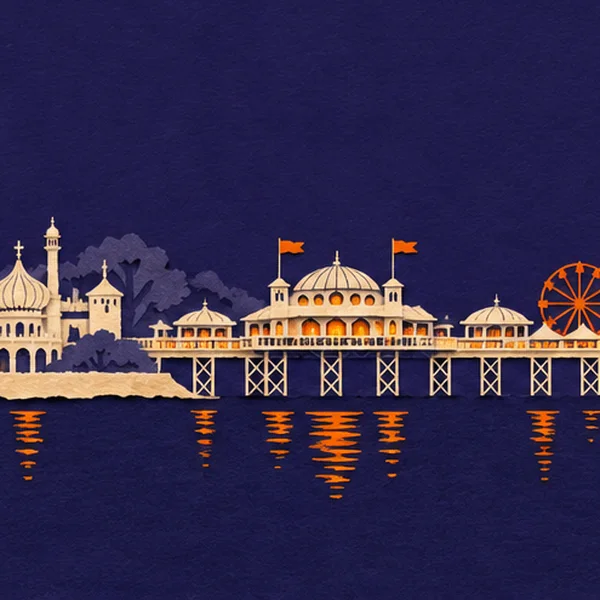
A seaside palace that began as a modest villa for the Prince of Wales, later George IV, and was transformed by John Nash from 1815 into the Indian-inspired style of domes and minarets seen today. The town bought it in 1850, and in the First World War it was a military hospital, first for Indian soldiers.
Brighton Palace Pier
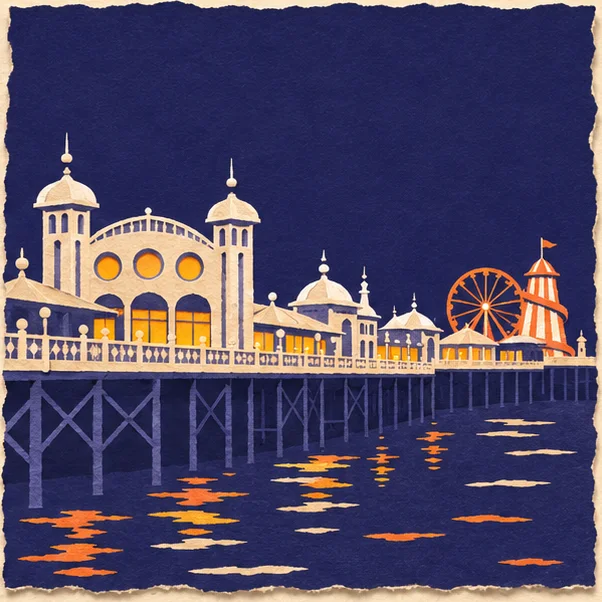
The pier opened on 20 May 1899 and is the only one of Brighton's piers still in use. It has fairground rides, including Air Race and the Helter Skelter, and charges an admission fee during peak periods.
West Pier and the i360
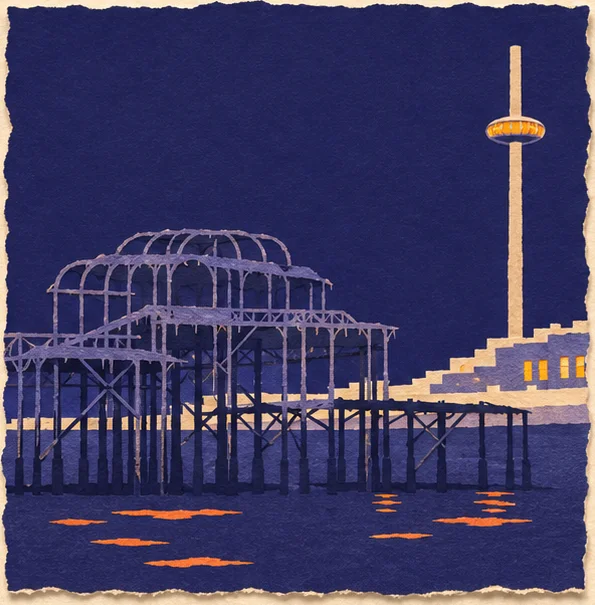
The West Pier opened in 1866, closed in 1975 and was hit by two arson attacks in 2003, and its Grade I listed iron frame still stands in the sea. Near it the i360, designed by Marks Barfield, the architects of the London Eye, lifts a glass pod to 138 metres.
Kemp Town's Regency terraces
Outdoors
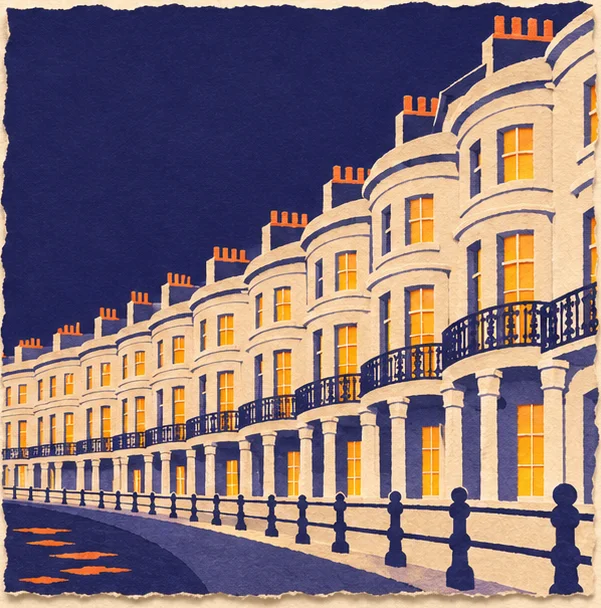
Kemp Town, east of the Palace Pier, is the city's Regency seafront estate. The houses of Sussex Square, Lewes Crescent and Arundel and Chichester Terraces are listed Grade I, and the terraces face the sea.
Brighton Museum & Art Gallery
The city's museum and art gallery, in the Royal Pavilion Garden beside the Royal Pavilion, run by Brighton & Hove Museums, with permanent collections and changing exhibitions.
Sea Life Brighton
Sea Life Brighton opened in 1872, to a design by Eugenius Birch, who also designed the West Pier, and calls itself the world's oldest continually operating aquarium. It has a glass-bottom boat ride over a large tank.
Volk's Electric Railway
Outdoors
Magnus Volk's little electric railway on the seafront opened in August 1883 and calls itself the world's oldest operating electric railway. It runs about a mile from the Aquarium, beside the Palace Pier, to Black Rock, and it closes for the winter.
The Lanes and North Laine
Outdoors
The Lanes are a tangle of narrow alleys with small shops. North of them North Laine, the city's bohemian quarter, has independent shops and cafes, and Upper Gardner Street has a flea market on Saturdays.