Capitole and Place du Capitole
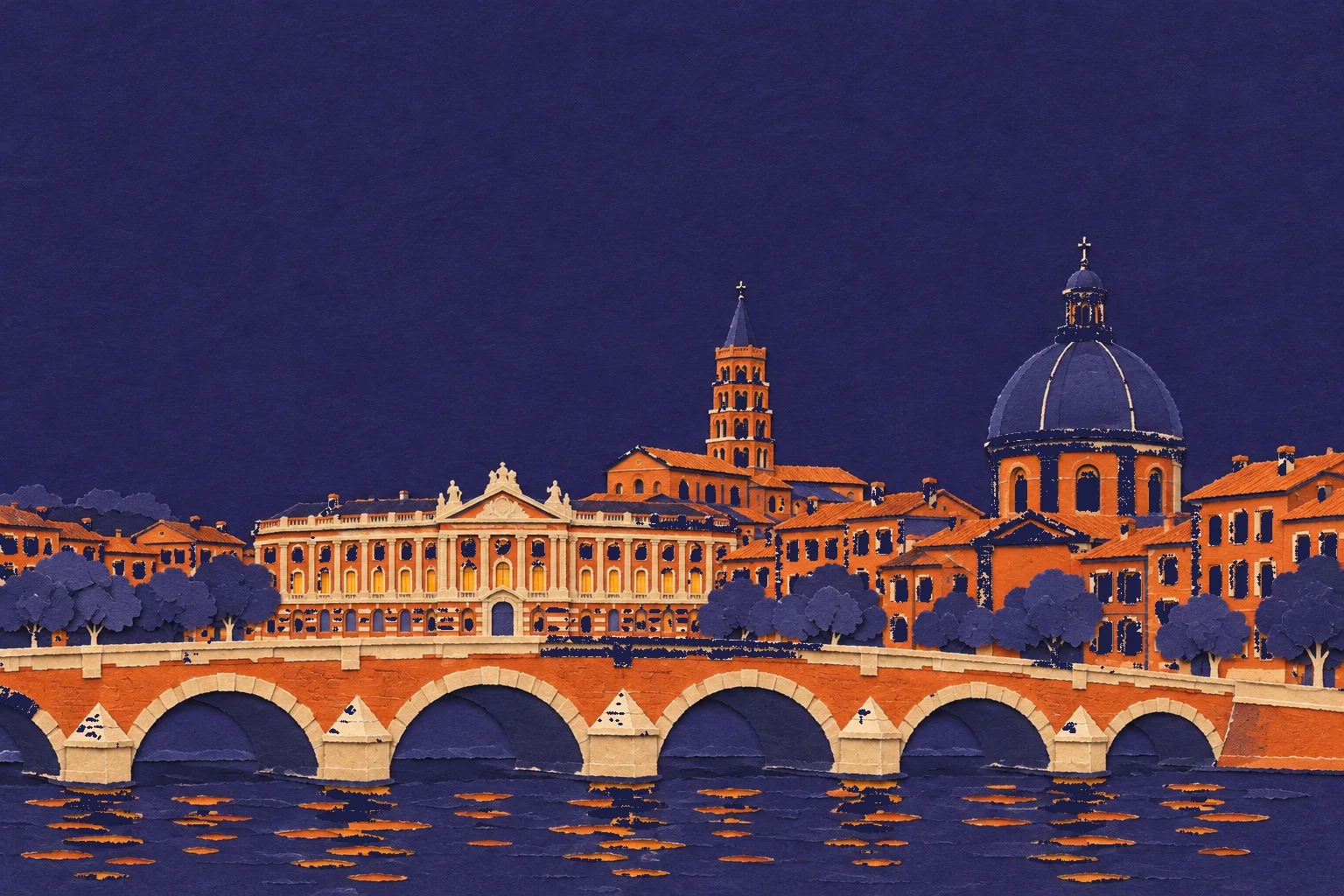
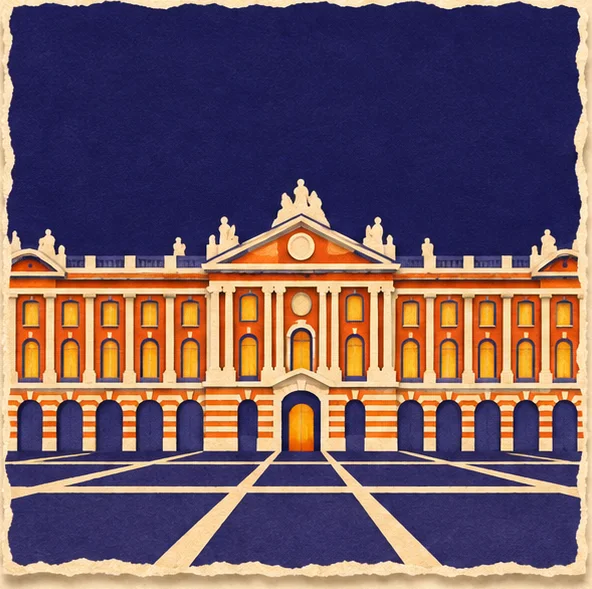
The town hall of Toulouse and its theatre share this long façade of brick and stone, built between 1750 and 1760, with eight marble columns for the eight old capitouls of the city. Behind it the Salle des Illustres, 60 metres long, is hung with the busts of local celebrities. The square in front is where the Christmas market and the Fête de la violette are held.
Basilica of Saint-Sernin
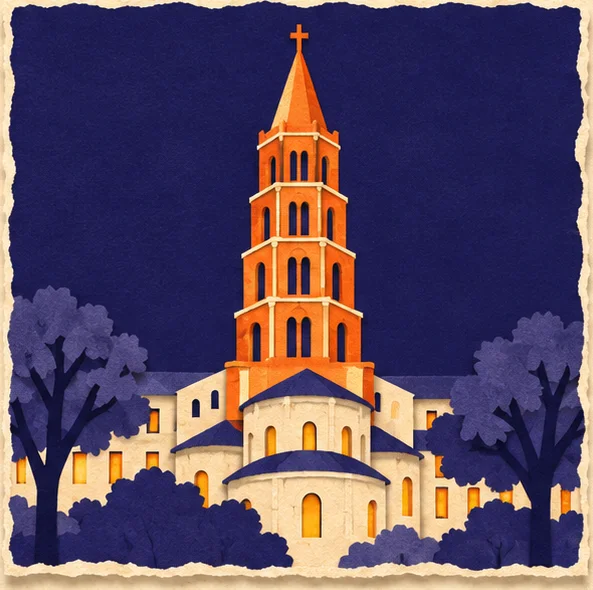
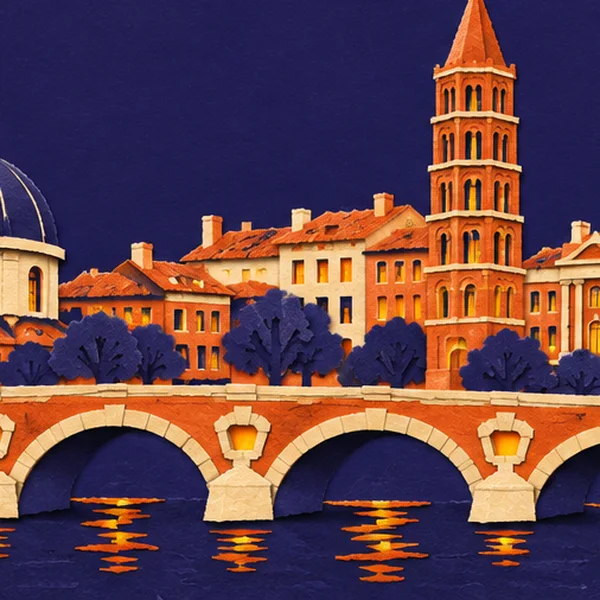
A Romanesque basilica begun in the late 11th century, one of the largest that survive in Europe, with an octagonal brick tower of about 65 metres. It stands on the pilgrim route to Santiago de Compostela and has been on the UNESCO list since 1998. It is said to keep 128 relics, and the crypt is open to visitors.
Pont Neuf
Outdoors
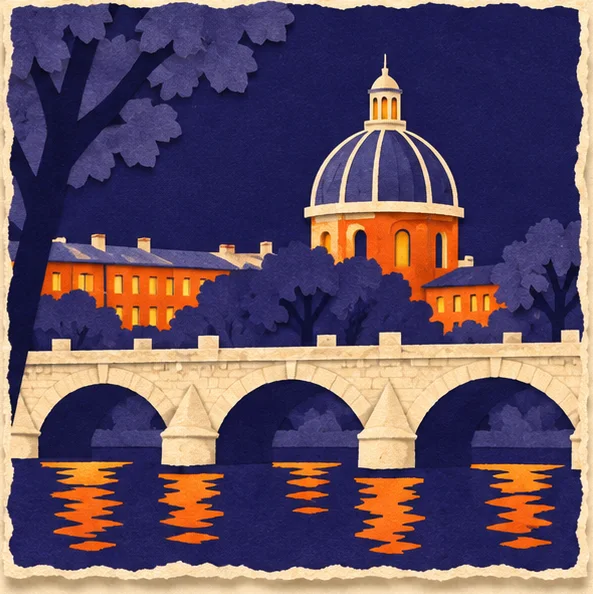
The bridge that carries traffic across the Garonne: 220 metres long, seven arches, its longest span 37 metres. Work began in the 1540s and the bridge was opened to traffic in 1632; Louis XIV inaugurated it in 1659. Its name is a joke of history, it was new once. The quays on both banks are the place to see it at sunset.
Cité de l’espace
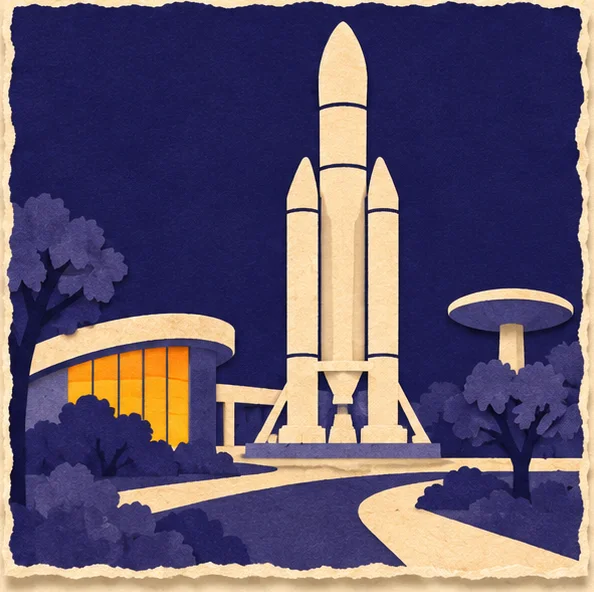
The space park opened in June 1997 on 4 hectares in the east of the city. Outside stands a full-scale Ariane 5, about 53 metres tall; inside there is a model of the Mir station, a planetarium of 280 seats and several exhibition halls. It is the most visited place in town for families, and a good bet on a rainy day.
Couvent des Jacobins
The church of the Dominican convent, begun in 1230, a few steps from the Capitole. Its great vault rises from a single column in the shape of a palm tree, at about 28 metres. The relics of Thomas Aquinas have lain here since 1974, and the cloister, built between 1306 and 1309, is where the Piano aux Jacobins recitals are played in September.
Musée des Augustins
A fine-arts museum in a Gothic convent, open to the public since 1795, which makes it one of the oldest museums in France. The permanent collections are free on the first Sunday of each month, like those of the city’s other museums.
Canal du Midi
Outdoors
The canal that links Toulouse to the Mediterranean, dug under Louis XIV between 1666 and 1681 by Pierre-Paul Riquet, and on the UNESCO list since 1996. In town its towpaths are for walking and cycling.