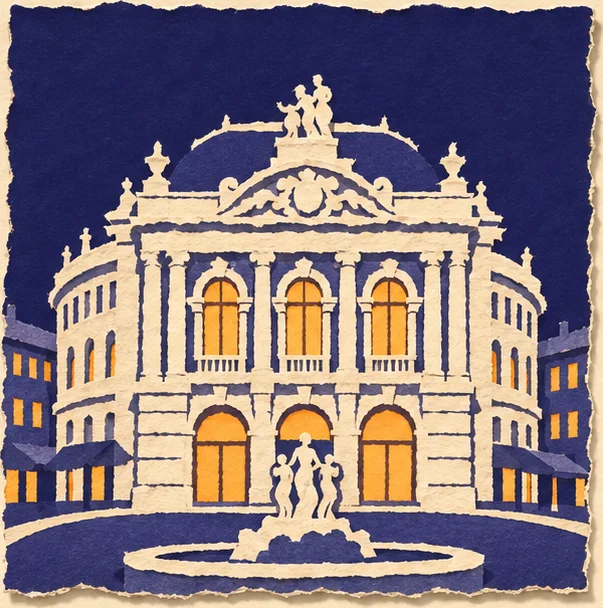
Opéra Comédie
IndoorsOfficial site ↗
The Italian-style theatre on Place de la Comédie, opened in 1888, home of the Opéra Orchestre national Montpellier Occitanie. In front of it stands the Three Graces fountain.
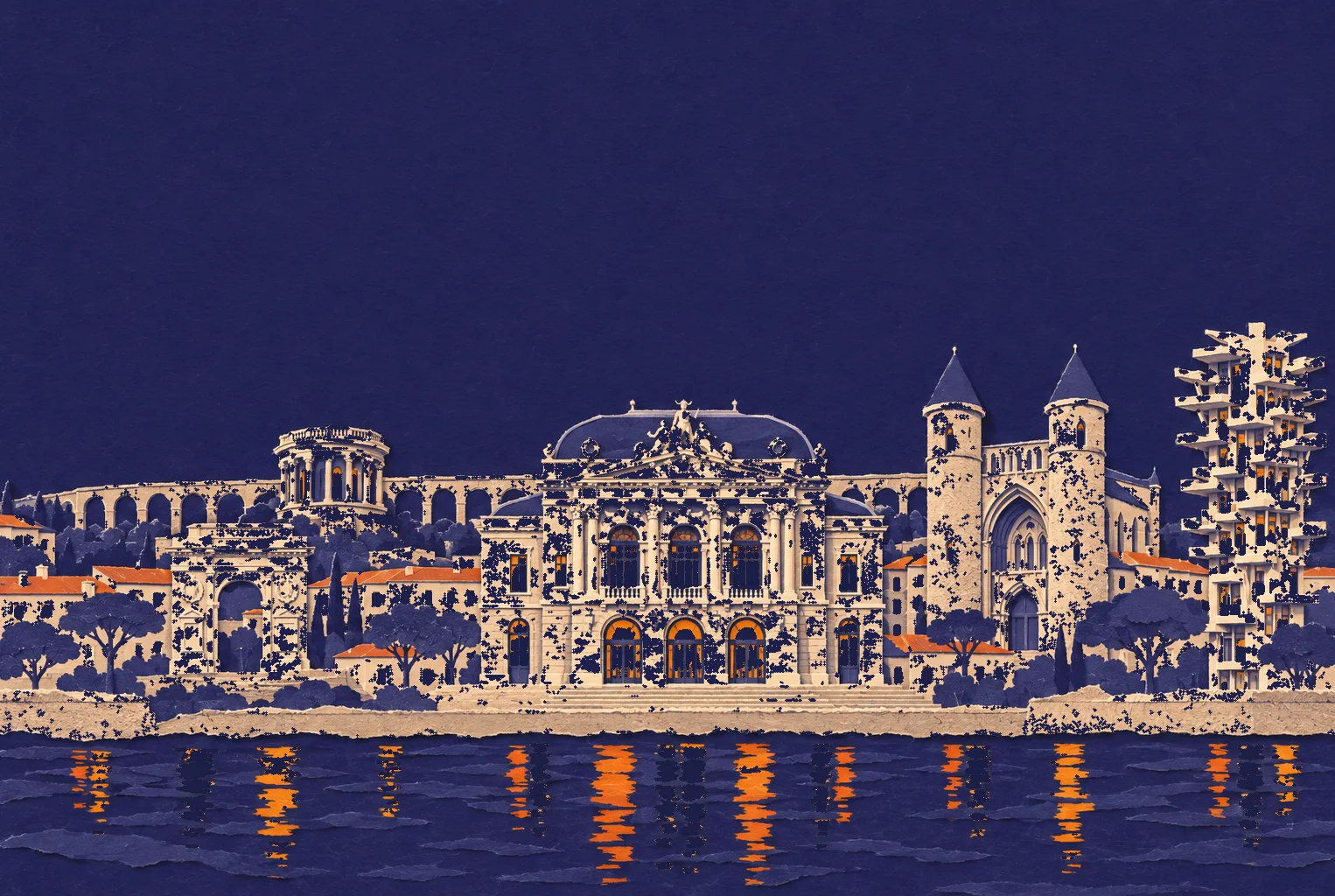





The places that make Montpellier: Opéra Comédie, Porte du Peyrou, Peyrou water tower and the Saint-Clément aqueduct and more, with what is on there next.
The Italian-style theatre on Place de la Comédie, opened in 1888, home of the Opéra Orchestre national Montpellier Occitanie. In front of it stands the Three Graces fountain.

A stone triumphal arch raised for Louis XIV at the end of the 17th century, at the end of rue Foch and at the entrance of the Promenade du Peyrou.

An 18th-century pavilion of columns at the end of the promenade, joined to the Saint-Clément aqueduct whose arches can be seen from the garden. On a clear day the promenade looks out as far as the sea.

A Gothic cathedral whose porch rests on two tall round towers capped with cones. It began as the church of a Benedictine monastery, beside the faculty of medicine.

The big oval square nicknamed “l’Œuf” (the egg), the city’s living room. The tram crosses it and café terraces surround it from morning to night.
A neoclassical district designed by Ricardo Bofill from the 1980s, with columns and squares running down to the banks of the Lez.
A residential tower finished in 2019 with cantilevered balconies, by the Lez.
The city’s main fine-arts museum, close to the Comédie. It holds European old masters and the works of Pierre Soulages.


