Evenitto's guide · the whole of Spain
Your first classical concert
There is no dress code and nobody checks whether you know the music. Here is what actually happens at a concert in Spain, and how to get the best seat for the least money.
- What happens at a concert
- When to clap
- What to wear
- Tickets and cheap seats
- Free concerts
- Taking children
- Access and hearing
- Getting there and home
What happens at a concert
Arrive about half an hour early: there is a cloakroom, a bar for a drink before and during the interval, and often a free introduction by a musician or musicologist before the concert.
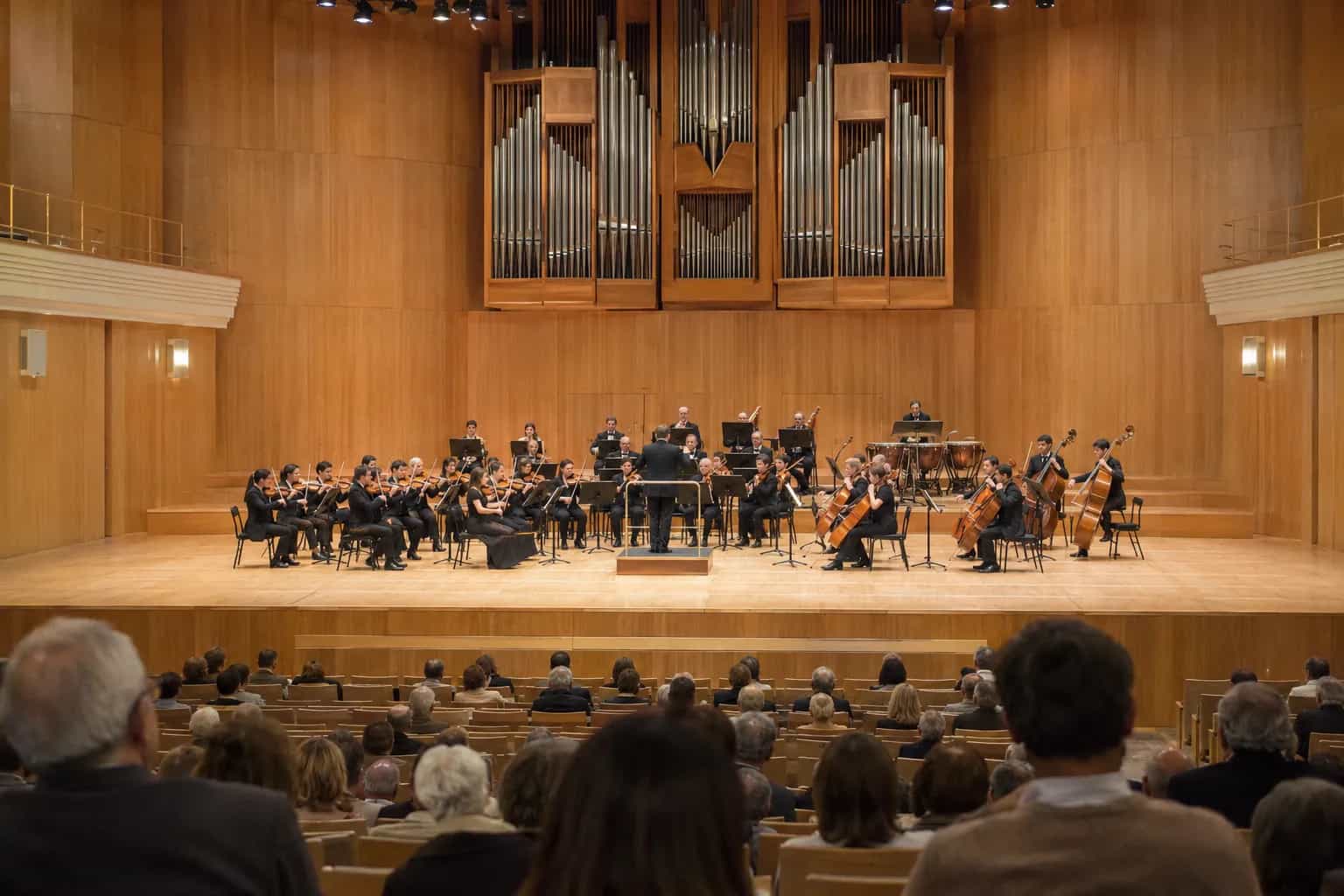
The orchestra comes on stage first and tunes to an A from the oboe. Then the leader of the violins bows, the conductor walks on, and the hall goes quiet.
Most evening concerts start at 19:30 or 20:00 and last about two hours, with an interval of twenty minutes.
When to clap
A symphony or concerto has several movements with short pauses between them. Most audiences stay silent in those pauses and clap at the end of the whole piece, when the conductor lowers their arms.
Nobody minds if you clap too early, and after a thrilling first movement some audiences do. At the opera and the zarzuela people applaud after an aria or a romanza; in a recital you can wait for the musician to lower their instrument.
Not sure? Wait for the people around you, then clap as long as you like.
What to wear
Wear whatever you would wear to a nice restaurant, or to the office. Jeans are fine everywhere; you will see suits and dresses next to trainers.
Premieres, galas and New Year's concerts are a little dressier, but even there nobody is turned away for their clothes.
Tickets and cheap seats
Buy from the hall or the orchestra's own website, where tickets go on sale months ahead; resale sites charge more and their tickets can be invalid.
Many halls and orchestras offer discounts to young people and students, often as last-minute tickets, with age limits that differ per hall. If you turn 18, you can also use the Bono Cultural Joven.
The cheapest seats are often the best value: in halls with seats behind or beside the stage you see the conductor's face and hear the orchestra from the inside.
Free concerts
Lunchtime and free concerts are one of the best-kept secrets of Spanish concert life. In Madrid the Fundación Juan March holds free concerts every week, and municipal bands play for free in parks and squares.
Conservatoires give recitals and public auditions, and churches hold organ concerts, many of them free.
Taking children
Family concerts are short, often an hour or less, and made for children, with a story, a presenter and an age on the ticket, from baby concerts to concerts for ten-year-olds.
For regular concerts, check the hall's minimum age; children who can sit still for forty minutes usually enjoy a morning concert with a famous piece.
Access and hearing
Most concert halls are step-free, with spaces for wheelchairs and a seat for a companion. Book these through the hall's box office rather than online.
Many halls have hearing loops in their main auditorium; ask at the box office or the cloakroom.
Getting there and home
Many of the big halls are close to a metro, tram or commuter-train station. Evening concerts usually end between 21:30 and 22:00, in good time for the last metro or the train home.
Check the last departures before you go.
