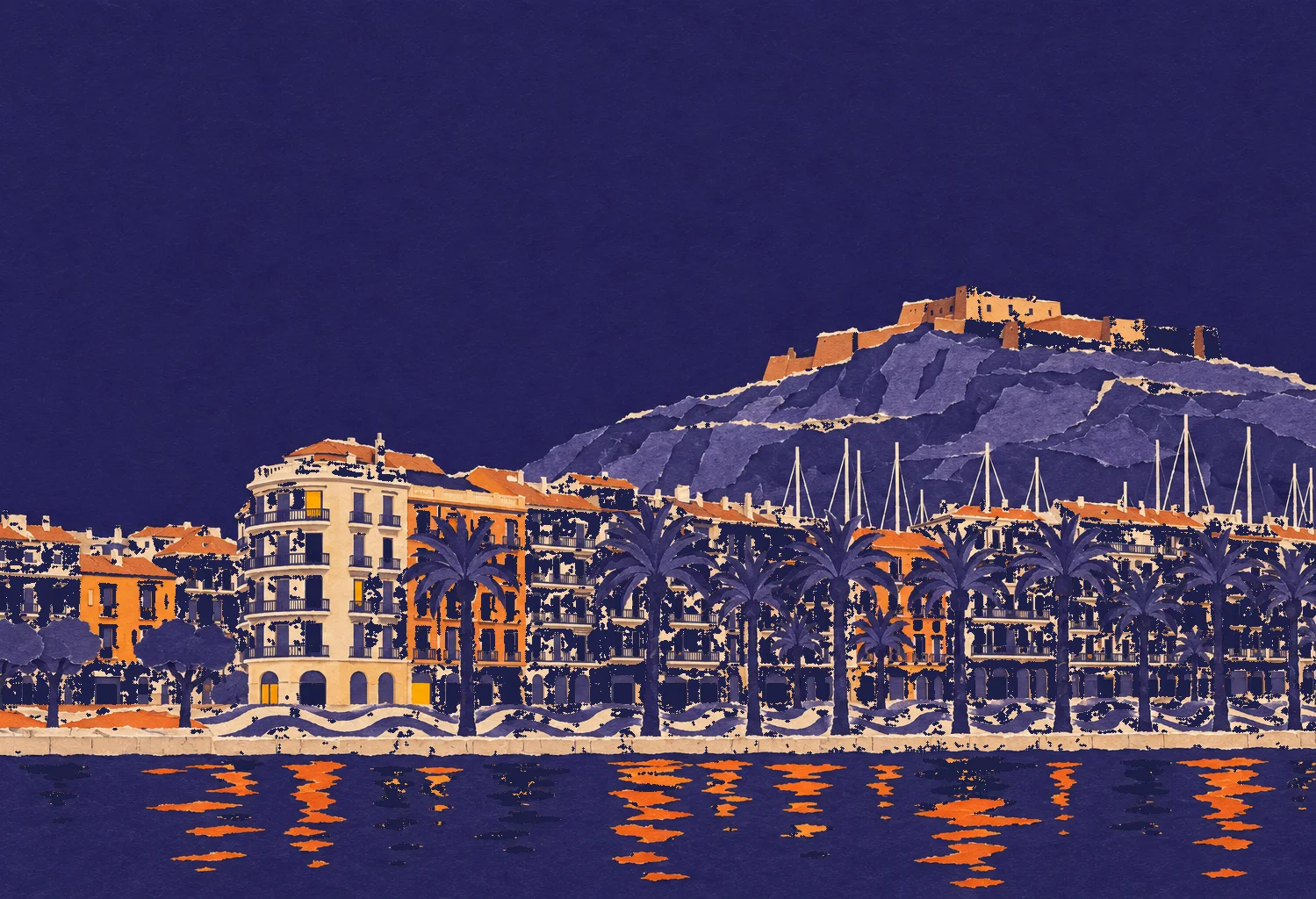
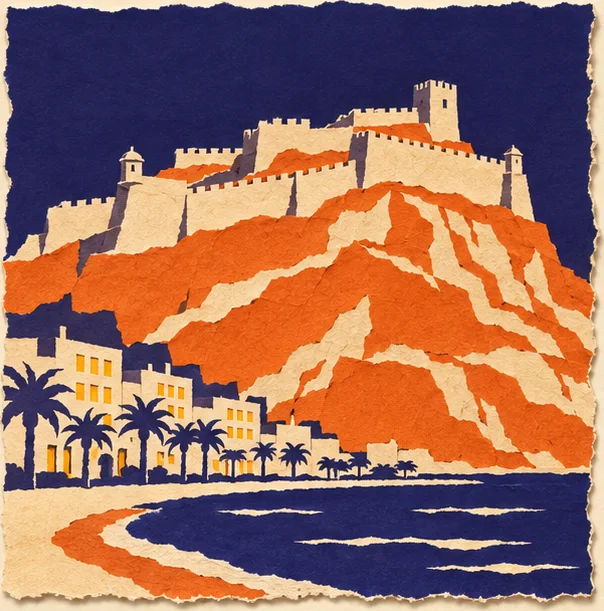
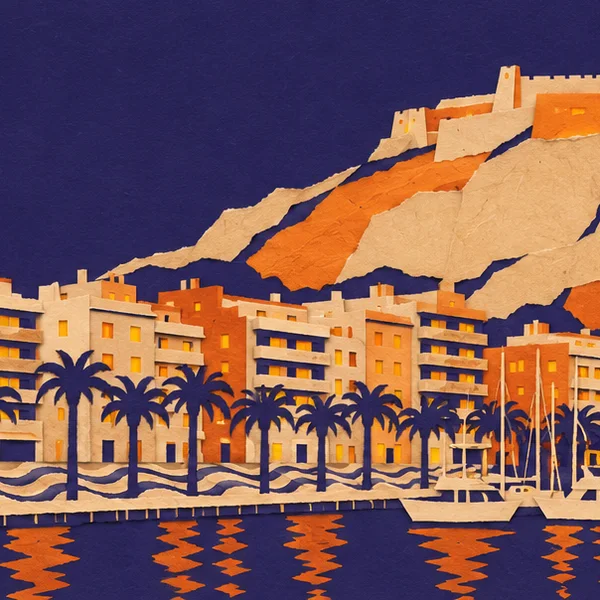
The castle on top of Mount Benacantil, above the city and the sea, with walls and rooms from several centuries. Entry is free; you can walk up from the old town or take the lift, which is paid, from the Postiguet beach.
Explanada de España
Outdoors
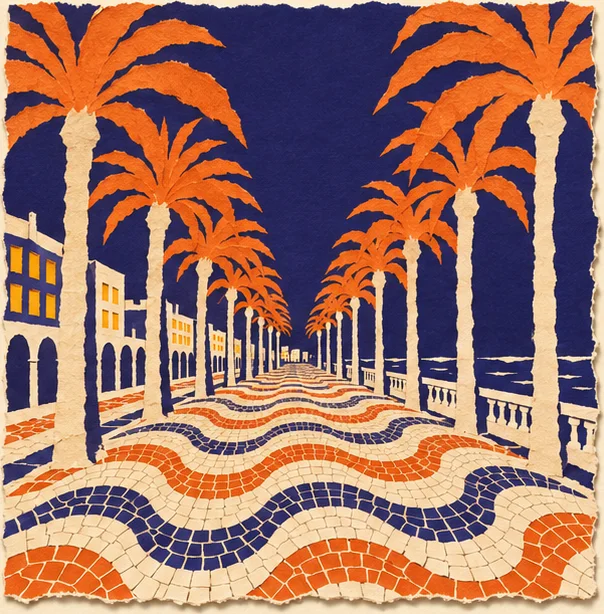
The seafront promenade lined with palm trees, paved with about six and a half million marble tiles in red, cream and black that draw waves. Walking it is free, and on summer evenings it fills with stalls and music.
Basilica of Santa María
Indoors
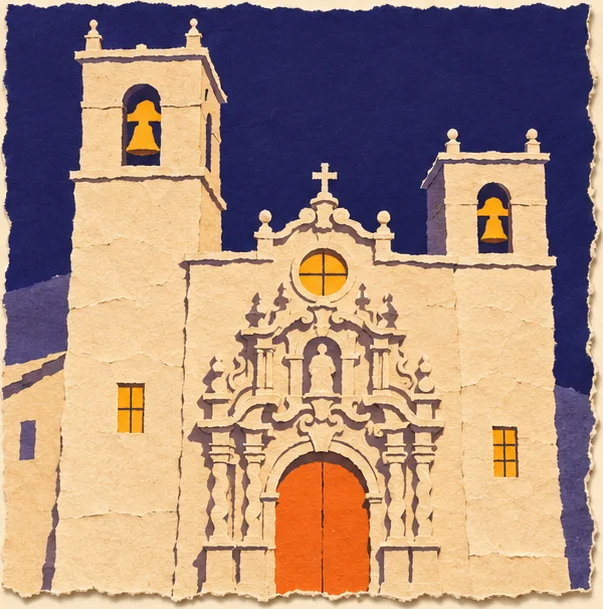
The oldest church in Alicante, raised in Valencian Gothic on the site of the old main mosque. Its Baroque doorway, between two towers, carries a Virgin carved by Juan Bautista Borja in the 18th century.
Barrio de Santa Cruz
Outdoors
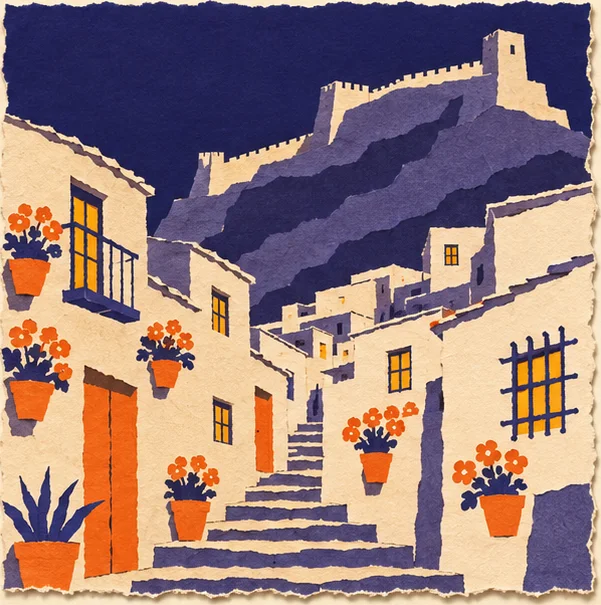
The quarter of whitewashed houses, flowerpots and steps climbing the slope of the Benacantil below the castle. On Holy Wednesday its brotherhood carries its floats down the narrow streets in the most watched procession of Alicante’s Holy Week.
The provincial archaeology museum in the old San Juan de Dios hospital, named European Museum of the Year in 2004. It runs from prehistory to the Iberians, Rome and the Middle Ages.
The co-cathedral of the old town, with its blue dome. The Santa Faz pilgrimage sets out from it every spring.
Postiguet beach
Outdoors
The city beach at the foot of the castle, a few steps from the Explanada. The castle lift starts here, and the Hogueras fireworks contest is let off over it in late June.
Tabarca Island
Outdoors
The only inhabited island of the Valencian Region, about an hour by boat from Alicante’s port. Its waters have been a marine reserve since 1986.