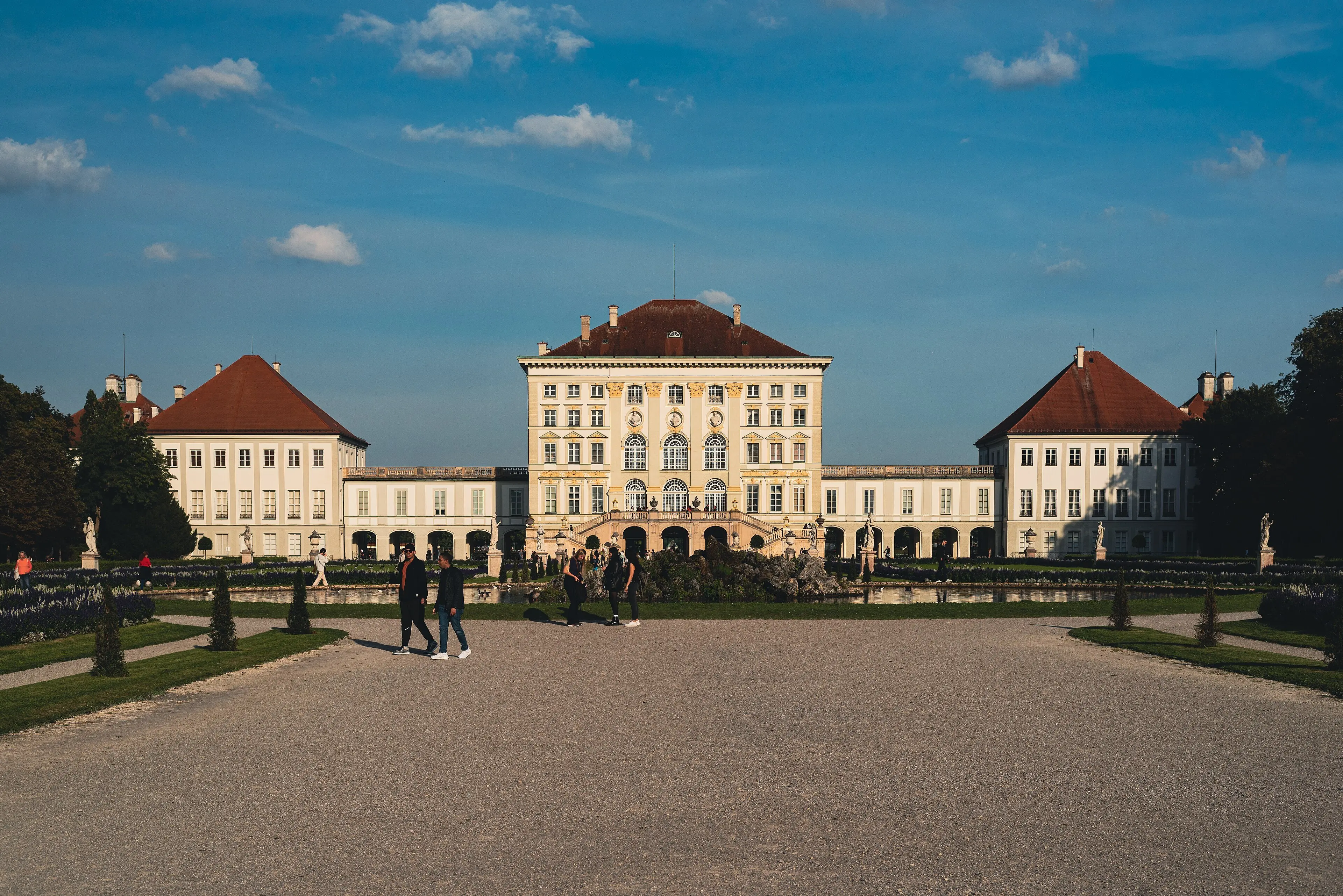
Schloss Nymphenburg in München
Schloss Nymphenburg hosts classical concerts in two historic palace halls, reached by tram 17 with free parking in the Schlossrondell.
Photo credits
The facade of Nymphenburg Palace seen across the garden in Munich, with the central pavilion and both wings.: Flocci Nivis · CC BY 4.0
Quick answers
- Concert hall
- Elysium series moves to Hubertussaal in Jan 2027
- Doors / start
- Elysium: 18:00 doors, 19:00 concert
- Typical finish
- Around 21:00 after about two hours
- Nearest tram
- Line 17, Schloss Nymphenburg stop
- From the main station
- Tram 17 via Stachus, then a short walk
- Parking
- Free, northern Schlossrondell
- Address
- Schloss Nymphenburg, 80638 München
Holidays at Schloss Nymphenburg
Open on the holidays: these nights are in the agenda.
- New Year's DaySchloss Nymphenburg with an Architect
Music at Schloss Nymphenburg: upcoming events
Tonight, this week and the months ahead at this venue in München.
December 2026


January 2027


February 2027

March 2027



Plan your visit to Schloss Nymphenburg
How big are the concert halls at Schloss Nymphenburg?
The palace and its concert organisers do not publish a seat count for the Johannissaal or Hubertussaal on the pages reviewed. The organiser describes the Johannissaal as a small hall where you sit close to the musicians; the Hubertussaal is a former festival and theatre hall with tall windows and historic parquet.
For scale, Munich's Olympiahalle holds between 12,500 and 15,500 people depending on the event, and the Cuvilliés Theatre in the Munich Residence is another historic venue people compare it with. A concert in a palace hall is a much smaller, more intimate affair than either.
| Venue | Type | Capacity |
|---|---|---|
| Schloss Nymphenburg (Johannissaal / Hubertussaal) | Historic palace halls | Not published |
| Cuvilliés Theatre, Munich Residence | Rococo court theatre | Not published on the page reviewed |
| Olympiahalle, Munich | Arena | 12,500–15,500, depending on the event |
Seating at a Schloss Nymphenburg concert
Your ticket names the hall. Seating rules differ between the two concert rooms, so check the concert page before you book.
Johannissaal
Free seating, no seat plan
Hubertussaal
Choose your seat in the seat plan
Steinerner Saal
Grand hall over three floors
In the Johannissaal there is free seating: tickets are sold without a seat plan, so arriving early gives you the pick of the room. The hall is small, with large windows and a view towards the Schlossrondell, and the musicians are close.
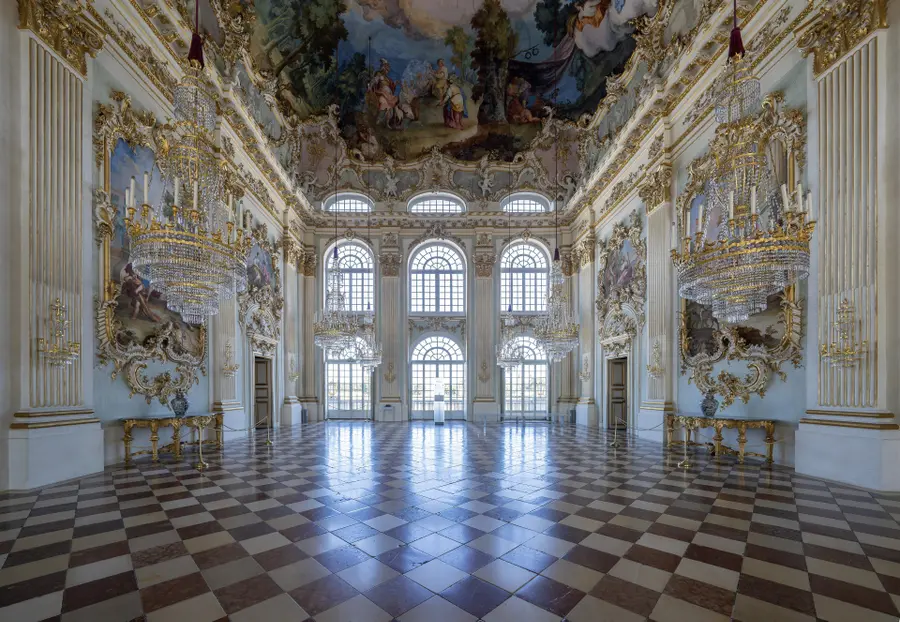
In the Hubertussaal you choose your place in an online seat plan when you book. It is the former court festival and theatre hall, with glass chandeliers, tall windows and historic parquet. The Steinerner Saal, the grand hall of the central pavilion, rises through three floors and is used for festive concerts.
- Arrive early for the Johannissaal: seats are not numbered.
- Wheelchair places are arranged directly with the organiser before the concert.
What time does a concert at Schloss Nymphenburg start and end?
In the Elysium 2026/27 evening series the doors open at 18:00 and the music starts at 19:00. You can buy a drink before the concert and settle in. Allow about two hours including the interval, so these concerts finish around 21:00. Other organisers may set different times; check the concert page for your event.
The lunchtime piano matinees in the Johannissaal start at 11:30 and last about an hour. There is no dress code: wear whatever you feel comfortable in.
- Evening doors
- 18:00
- Evening start
- 19:00
- Evening finish
- About 21:00
- Matinee
- 11:30 start, about one hour
Accessibility at the concert halls
Both the Johannissaal and the Hubertussaal can be reached by lift. If you need the lift or would like a wheelchair space, contact the organiser in advance so that it can be arranged.
- Lift
- Both concert halls reachable by lift
- Wheelchair places
- Arrange with the organiser beforehand
Food and drink at a palace concert
Drinks are on sale from 18:00 and during the interval. Catering takes cash only, and drinks are not included in a regular ticket; VIP tickets include the extras described on the concert page.
You can visit the palace museum before or after a concert with a valid ticket, but that admission does not cover the Museum of Man and Nature or the carriage museum. The palace's outer south wing has a restaurant with a beer garden.
- Drinks
- From 18:00 and in the interval
- Payment
- Cash only at catering
- Restaurant
- Beer garden in the outer south wing
Getting to Schloss Nymphenburg
Tram 17 is the direct route: it runs from the city centre past Stachus and Munich's main station to the Schloss Nymphenburg stop. From there you walk to the hall in the northern part of the palace.
Coming from the U-Bahn, change to the tram at Rotkreuzplatz; from S-Bahn Laim, continue by bus. Check the MVV planner for the exact connection on the night of your concert.
Parking at Schloss Nymphenburg
There are free public car parks in the northern Schlossrondell, close to the concert halls. Give yourself time to find a space and walk to your hall, especially on concert evenings.
| Car park | Address | Walk | Rate |
|---|---|---|---|
| Free public car park, northern Schlossrondell | Schloss Nymphenburg, 80638 München | Short walk to the hall | Free |
About Schloss Nymphenburg
Schloss Nymphenburg is a Baroque palace in Munich's Neuhausen-Nymphenburg district and the former summer residence of the Wittelsbach rulers of Bavaria. Elector Ferdinand Maria and Henriette Adelaide of Savoy commissioned it in 1664; Agostino Barelli designed the first building, and Enrico Zuccalli, Giovanni Antonio Viscardi and Joseph Effner expanded it over the following decades.
The palace is a complex rather than one hall. The Steinerner Saal is the grand hall of the central pavilion; the Johannis and Hubertus halls sit in the north wing, the carriage museum and porcelain collection in the south wing, and the Museum of Man and Nature in the north wing. A 200-hectare park surrounds the building, with the Amalienburg hunting lodge and the Grand Cascade.
The Elysium evening series moves from the small Johannissaal to the larger Hubertussaal in January 2027; the Bavaria Klassik piano matinees continue in the Johannissaal. Both halls are in the northern part of the palace and are reached by lift. The main building alone draws more than 300,000 visitors a year.
- Palace opened
- Central pavilion completed in 1675
- Park
- 200 hectares, open since 1792
History of Schloss Nymphenburg
The palace was commissioned in 1664 by Elector Ferdinand Maria and Henriette Adelaide of Savoy after the birth of their son, and Agostino Barelli designed the central pavilion, finished in 1675. Zuccalli, Viscardi and Effner enlarged it in the following decades; Effner also built the Grand Cascade in 1717.
It was the Wittelsbachs' summer residence. Elector Max III Joseph founded the Nymphenburg porcelain manufactory in 1747, Charles Theodore opened the park to the public in 1792, and Ludwig II was born here in 1845. Mozart played at the court with his sister Nannerl when he was seven, and the rococo Amalienburg hunting lodge was built in the park between 1734 and 1739.
Photos
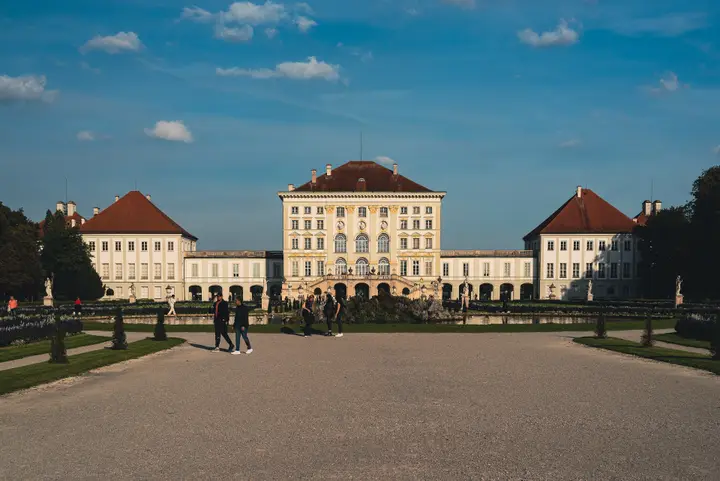
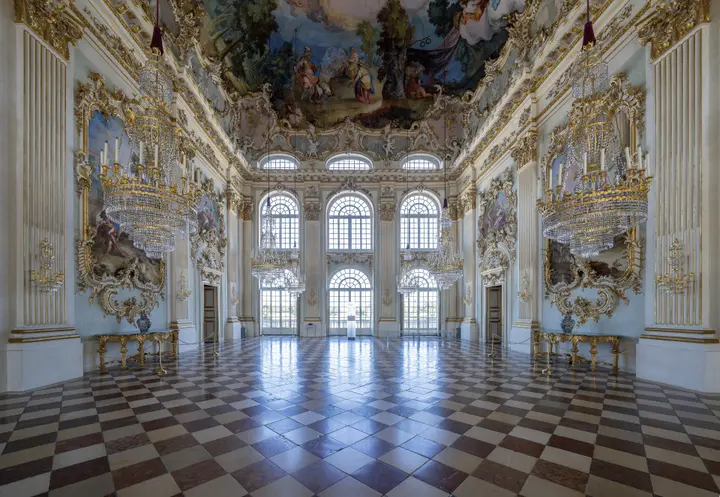
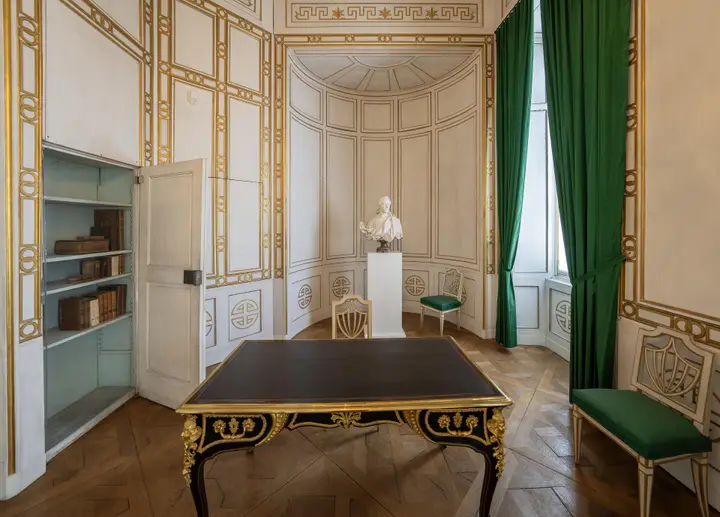
Photo credits
The facade of Nymphenburg Palace seen across the garden in Munich, with the central pavilion and both wings.: Flocci Nivis · CC BY 4.0
The Steinerner Saal at Nymphenburg Palace, the grand rococo hall with its painted ceiling fresco.: AuHaidhausen · CC BY 4.0
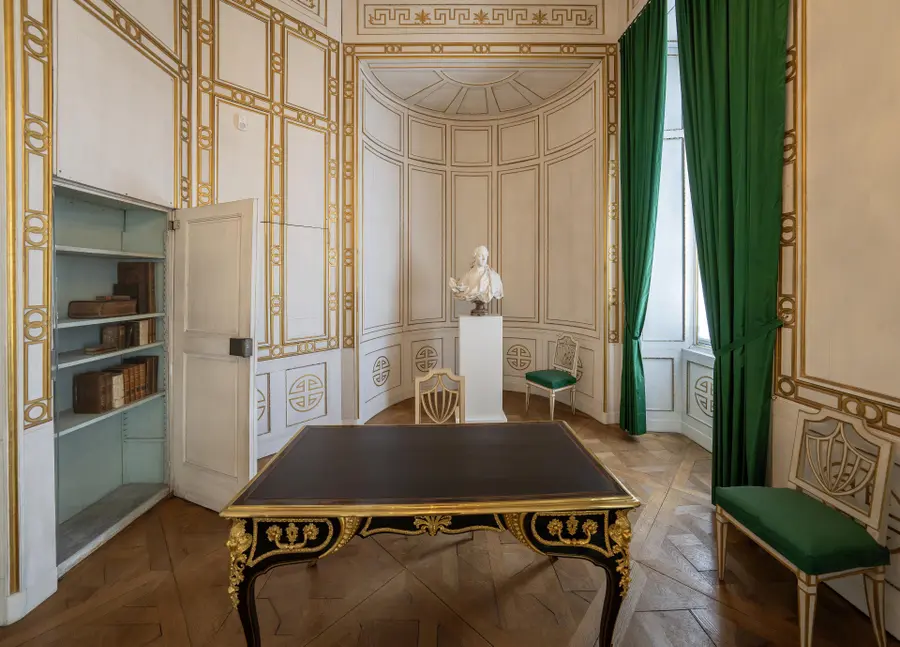
The historic study of Karl Theodor inside Nymphenburg Palace, with period furniture and panelled walls.: AuHaidhausen · CC BY 4.0
Read reviews on Google Maps We don't show ratings here. See what visitors say on Google Maps.
Frequently asked questions
What time do concerts at Schloss Nymphenburg start and end?
In the Elysium 2026/27 evening series the doors open at 18:00 and the concert starts at 19:00, lasting about two hours with an interval, so it finishes around 21:00. Piano matinees in the Johannissaal begin at 11:30 and last about an hour, ending around 12:30. Other organisers may differ.
Which hall will my concert be in?
Elysium's evening series uses the Johannissaal until December 2026 and moves to the Hubertussaal from January 2027, while Bavaria Klassik's matinees stay in the Johannissaal. Your ticket and the concert page name the hall; both rooms are in the north wing.
Can I choose my seat?
In the Hubertussaal you pick a place in the online seat plan. In the Johannissaal seating is free and tickets are sold without a seat plan, so come early for a good place.
How do I get there by public transport?
Take tram 17 to the Schloss Nymphenburg stop and walk to the north wing. From Rotkreuzplatz U-Bahn station change to the tram; from S-Bahn Laim continue by bus. Check the MVV planner for your exact journey.
Is there parking at Schloss Nymphenburg?
Yes. There are free public car parks in the northern Schlossrondell, close to the halls. Allow extra time to find a space and walk to your concert on busy evenings.
Are the concert halls accessible?
Both halls can be reached by lift. Contact the organiser in advance if you need the lift or want to book a wheelchair space, so that it can be arranged for your visit.
Can I buy a drink during the concert?
Drinks are sold from 18:00 and during the interval. Catering takes cash only and drinks are not included in a regular ticket; VIP tickets list their own extras.
Is there a dress code?
No. There is no dress code for concerts at Schloss Nymphenburg; wear whatever you feel comfortable in, whether that is smart or relaxed.
What is the Steinerner Saal?
The Steinerner Saal (Stone Hall) is the grand hall in the palace's central pavilion. It rises through three floors, with ceiling frescoes by Johann Baptist Zimmermann and rococo decoration by François de Cuvilliés.
Can I visit the palace before the concert?
Yes, the palace museum can be visited before or after a concert. The ticket does not include admission to the Museum of Man and Nature or the carriage museum (Marstallmuseum).
How much does a concert ticket cost?
Prices and reductions are shown in the ticket selection on each concert page. A family ticket covers two adults and up to four children aged 4 to 18.
Who built Schloss Nymphenburg?
Elector Ferdinand Maria and Henriette Adelaide of Savoy commissioned it in 1664 as a Wittelsbach summer residence. Agostino Barelli was the first architect; Enrico Zuccalli, Giovanni Antonio Viscardi and Joseph Effner extended it later.
Sources: Wikipedia: Nymphenburg Palace (November 19, 2026) · Wikipedia: Olympiahalle (November 19, 2026) · Elysium Concerts, good to know (November 19, 2026)


