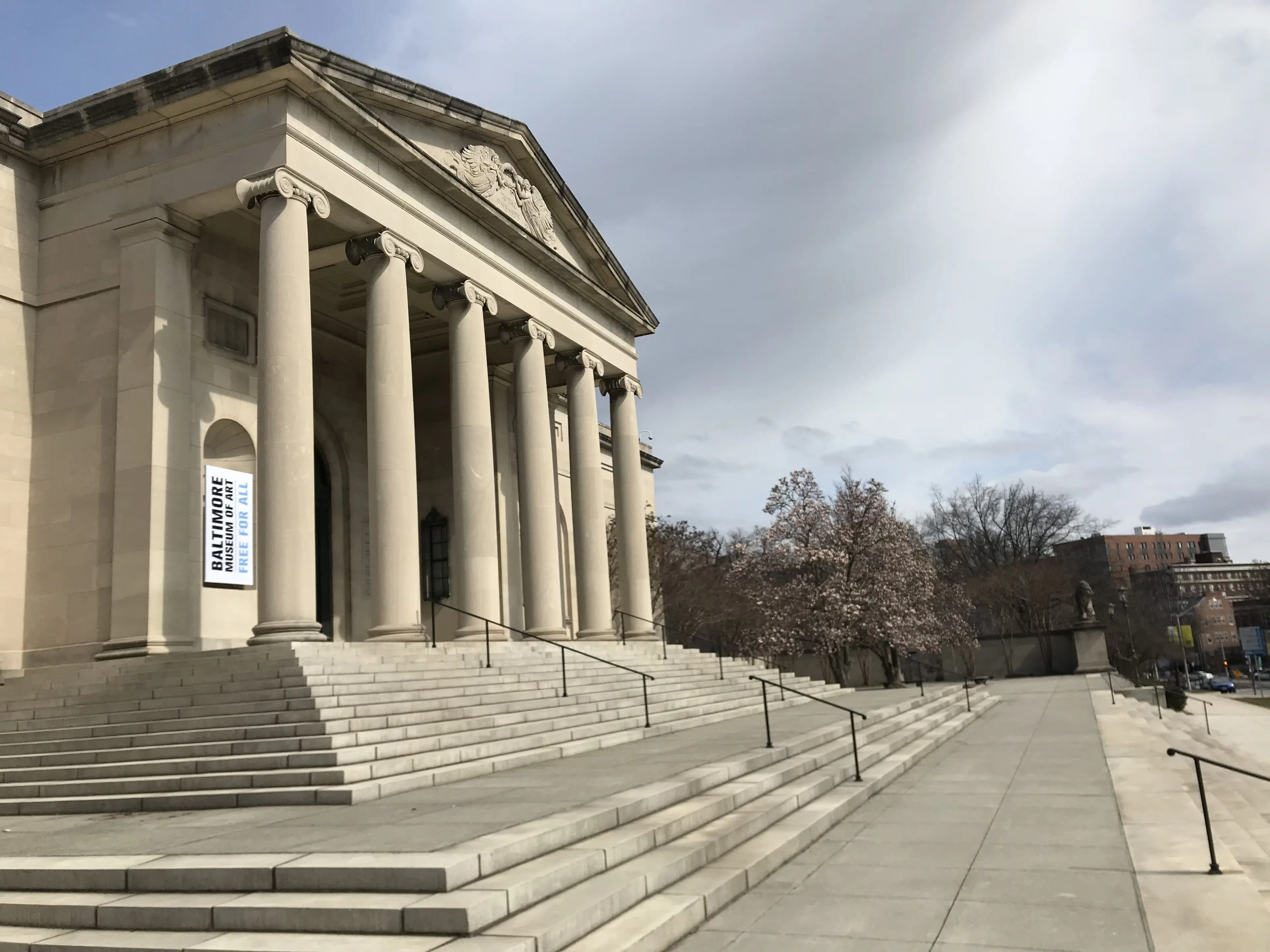
Baltimore Museum of Art in Baltimore
Maryland's largest art museum: 95,000 objects, a free-entry neoclassical building in Charles Village, two sculpture gardens and evening concerts in the Meyerhoff Auditorium.
Photo credits
The neoclassical Baltimore Museum of Art on Art Museum Drive, its stone facade and columns seen from outside.: Eli Pousson (Baltimore Heritage) · CC0
Quick answers
- Admission
- Free; reserve a ticket
- Address
- 10 Art Museum DriveBaltimore, 21218
- Opening
- Wed–Sun 10:00–17:00; Thu to 21:00
- Address
- 10 Art Museum Drive, Baltimore
- Parking
- Free 30 min; $12 day, $9 evening
- By bus
- BaltimoreLink and Circulator Purple Route
- Main rail station
- Penn Station, then bus or taxi
- Building
- 210,000 sq ft; 95,000 objects
- Contact
- (443) 573-1700
Baltimore Museum of Art agenda: upcoming events
Tonight, this week and the months ahead at this venue in Baltimore.







Plan your visit to Baltimore Museum of Art
How big is the Baltimore Museum of Art?
- Gallery capacity
- Not published
- Building
- 210,000 square feet
- Collection
- 95,000 objects
- Visitors a year
- More than 200,000
- Hippodrome Theatre
- 2,300
- Lyric Performing Arts Center
- 2,564
- Reitz Arena
- 2,100
The museum does not publish a visitor capacity for its galleries. Its building covers 210,000 square feet and the collection holds 95,000 objects; the Meyerhoff Auditorium is the room used for evening concerts, but the museum does not publish a seat count for it.
For scale, the best-known performance venues near the museum are the Hippodrome Theatre downtown and, on the nearby university campuses, the Lyric Performing Arts Center and Reitz Arena. All three publish capacities; the museum does not.
| Venue | Kind | Capacity or figure | Source |
|---|---|---|---|
| Baltimore Museum of Art | Art museum | Not published; 210,000 sq ft, 95,000 objects | Wikipedia |
| Hippodrome Theatre, Baltimore | Theatre | 2,300 | Wikidata |
| Lyric Performing Arts Center, Baltimore | Performing arts centre | 2,564 | Wikidata |
| Reitz Arena, Baltimore | Arena | 2,100 | Wikidata |
Seating for concerts in the Meyerhoff Auditorium
The galleries are walk-in spaces; the seated room is the Meyerhoff Auditorium, where the museum's concerts and talks take place.
- Room
- Meyerhoff Auditorium, used for concerts and talks
- Accessible seating
- Reserved places along the perimeter near interpreters and caption screens
- Hearing support
- Assistive listening devices; ASL and live captioning at every event
- Service animals
- Welcome in the auditorium, galleries and gardens
- Seat map
- Not published by the museum; check your ticket seller
The Meyerhoff Theater is fully accessible to mobility aids. At events, accessibility ushers near the entrance help visitors find reserved seating along the perimeter, close to ASL interpreters and captioning screens, and sections for visitors using mobility aids together with companions and service animals.
The museum does not publish a numbered seat map for the auditorium on its visitor pages. The ticket seller for your concert shows the current layout; if you need a particular kind of seat, call Visitor Experience on 443-573-1701 before the show.
- Need a wheelchair space or a companion seat? Call Visitor Experience on 443-573-1701 before the event.
- All events in the Meyerhoff Theater include ASL interpretation and live captioning.
- Assistive listening devices are available for programs in the auditorium.
Eating, drinking and shopping at the BMA
Gertrude's Chesapeake Kitchen serves farm-fresh Chesapeake cuisine with views of the Sculpture Garden. It is open Wednesday to Saturday 11:30 a.m.–8 p.m. and Sunday 10 a.m.–3 p.m. and 4:30–7 p.m.; it is closed Monday and Tuesday. The Cone Sisters Garden Café kiosk in the Segal East Lobby offers seasonal snacks and drinks.
The BMA Shop sells books, apparel, jewelry and keepsakes inspired by the collection, Wednesday to Sunday 10 a.m.–5 p.m. and Thursday until 9 p.m. Eating and drinking are not allowed in the galleries: a water fountain and bottle filler sit near the East Lobby restrooms, and free lockers can hold your bottle while you look around.
- Restaurant
- Gertrude's Chesapeake Kitchen, with garden views
- Restaurant hours
- Wed–Sat 11:30 a.m.–8 p.m.; Sun 10 a.m.–3 p.m. and 4:30–7 p.m.
- Kiosk
- Cone Sisters Garden Café, Segal East Lobby
- BMA Shop
- Wed–Sun 10 a.m.–5 p.m.; Thu until 9 p.m.
- In the galleries
- No food or drink; water fountain near East Lobby restrooms
Bags, photos and time in the galleries
Backpacks, backpack baby carriers, diaper bags, packages, laptops and anything larger than 11 × 15 inches must be checked in the Checkroom. Locker space is limited; oversized luggage goes into designated museum storage areas that are out of public view but are not locked or supervised. Strollers are welcome throughout the galleries.
Look with your eyes, not your hands, unless a sign says an artwork may be touched. Sketching in the collection galleries is allowed with pencil only, on paper no larger than 12 × 18 inches. Professional photography anywhere on museum property needs advance approval, and visitors use their own devices for the free digital audio guides on Bloomberg Connects because the museum does not lend headphones.
The Sculpture Gardens and Spring House are open from 10 a.m. to dusk, weather permitting, and no reservation is needed.
- Bag limit
- Items over 11 × 15 inches checked in the Checkroom
- Lockers
- Limited space; large bags in unsecured storage
- Sketching
- Pencil only, paper up to 12 × 18 inches
- Photography
- Professional shoots need advance approval
- Audio guides
- Bring your own device for Bloomberg Connects
- Sculpture Gardens
- 10 a.m. to dusk, weather permitting
- Water bottles can be stored in the free lockers; they are not allowed in the galleries.
- Every restroom has a baby-changing station; a Family Restroom is in the Segal East Lobby.
- Pick up a printed museum map at the Welcome Desk or plan ahead with the digital map.
Accessibility at the Baltimore Museum of Art
The Zamoiski East Entrance has a ramp for mobility aids and strollers, and four accessible parking spaces sit outside it. If they are all occupied, visitors with accessible tags may park in any BMA visitor lot space for free; bring your parking ticket to the Welcome Desk for validation. Inside, two elevators reach the second floor and a third in the Contemporary Wing reaches the third-floor galleries.
Manual wheelchairs are free at the Checkroom in the Segal East Lobby; strollers, a walker and rollators are also available. All first-floor restrooms are fully accessible, but the multi-stalled restrooms by the Cone Wing on the second floor are not yet fully accessible. Service animals are welcome in the galleries, the Meyerhoff Theater and the Sculpture Gardens; pets are not permitted.
The Quiet Room in the Joseph Education Center offers soft seating, dimmable lighting and sensory devices. In-gallery videos are captioned or described, and ASL interpretation is free on request for tours and programs if you ask at least two weeks ahead.
- Accessible entrance
- Zamoiski East Entrance, with a ramp
- Accessible parking
- Four spaces outside the entrance; any lot free if full
- Elevators
- Two to the second floor, one to the third-floor galleries
- Wheelchairs
- Free at the Checkroom in the Segal East Lobby
- Restrooms
- First floor accessible; Cone Wing rooms not yet
- Service animals
- Welcome; pets are not permitted
- Quiet Room
- In the Joseph Education Center
- Call 443-573-1701 or email the museum with questions before your visit.
- ASL interpretation for tours and programs needs at least two weeks' notice.
Getting to the Baltimore Museum of Art
The museum stands at North Charles and 31st Streets in Charles Village, about three miles north of the Inner Harbor. BaltimoreLink buses on routes Silver, 21, 51, 94 and 95 and the Charm City Circulator Purple Route serve the area; use the transit agency's trip planner for the stop closest to where you start.
Penn Station is Baltimore's main rail station. From there, continue by bus or taxi to Art Museum Drive; the museum's visitor pages do not give a walking time for the trip. For transport questions, Visitor Experience can be reached on 443-573-1701.
By bus
BaltimoreLink routes Silver, 21, 51, 94 and 95
Circulator
Charm City Circulator Purple Route
Main rail station
Penn Station, then bus or taxi
Neighbourhood
Charles Village, at North Charles and 31st Streets
From the Inner Harbor
About three miles north
- Concerts in the Meyerhoff Auditorium finish in the evening; check the transit agency's planner for the last bus or train before you travel.
- For questions about a route or a ride, Visitor Experience can be reached on 443-573-1701.
Parking at the Baltimore Museum of Art: rates and lots
The museum has two on-site lots, free for the first 30 minutes, plus an underground garage nearby and metered street spaces.
The East and West lots are for museum and Gertrude's patrons and both include wheelchair-accessible spaces. Parking is free for up to 30 minutes, then $12 for the daily rate (6 a.m.–5 p.m.) or $9 for the evening rate (5 p.m.–midnight). Cars with accessibility placards or plates park free. Pay at the Welcome Desk or the pay station in the East Lobby, by cash, debit or credit card.
Members get $3 off parking during museum hours. The Johns Hopkins University South Garage is a large underground facility entered from Wyman Park Drive, between San Martin Drive and Art Museum Drive. Limited metered parking is available on Art Museum Drive; display the printed receipt on your dashboard.
| Car park | Address or access | Walk | Rate |
|---|---|---|---|
| BMA East Lot | 10 Art Museum Drive | At the Zamoiski East Entrance | Free 30 min; $12 day; $9 evening |
| BMA West Lot | 10 Art Museum Drive | Across the museum grounds | Free 30 min; $12 day; $9 evening |
| Accessible spaces | Outside the Zamoiski East Entrance | At the entrance | Free with placard or plate |
| JHU South Garage | Wyman Park Drive | Short walk uphill to the museum | Not published by the BMA |
| On-street meters | Art Museum Drive | Beside the entrance | Metered; coins or card |
- First 30 minutes
- Free
- Daily rate
- $12, 6 a.m.–5 p.m.
- Evening rate
- $9, 5 p.m.–12 a.m.
- Accessible vehicles
- Free with placard or plate
- BMA members
- $3 off during museum hours
- JHU South Garage
- Entered from Wyman Park Drive
About the Baltimore Museum of Art
The Baltimore Museum of Art is Maryland's largest art museum. It was founded in 1914 at 10 Art Museum Drive in Charles Village, beside the Johns Hopkins University Homewood campus. Its neoclassical building was designed in the 1920s by John Russell Pope and is a designated Baltimore City Landmark.
The collection holds 95,000 objects, including more than 1,000 works by Henri Matisse anchored by the Cone Collection, as well as prints, drawings and photographs. More than 200,000 people visit each year. General admission is free, although special exhibitions need a separate ticket.
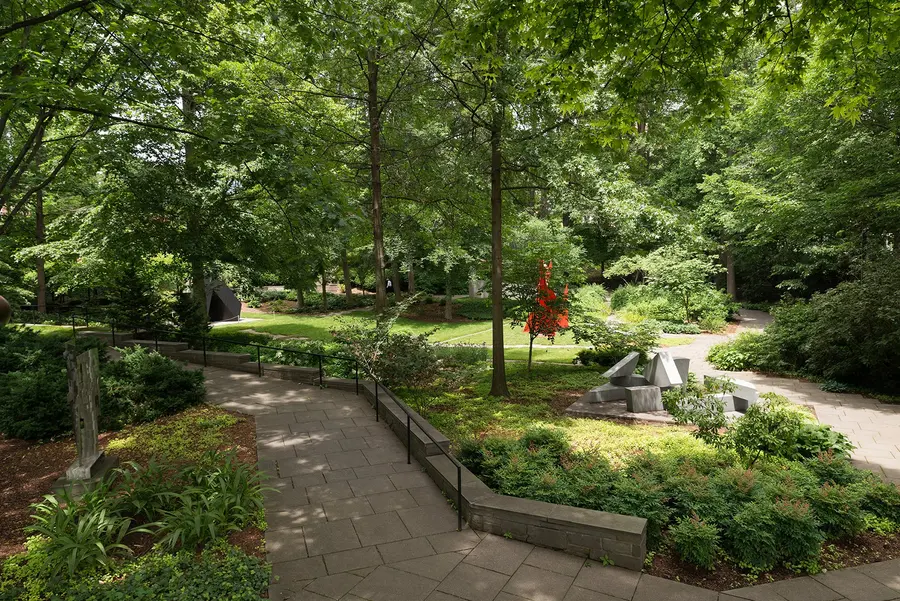
Two landscaped gardens with 20th-century sculpture sit beside the building. The Sculpture Gardens and Spring House are open from 10 a.m. to dusk, weather permitting.
Inside are the galleries, the Meyerhoff Auditorium used for concerts and talks, the BMA Shop and Gertrude's Chesapeake Kitchen. Visitors enter through the Zamoiski East Entrance; the Merrick Historic Entrance is exit only.
- Founded
- 1914
- Architect
- John Russell Pope, 1920s
- Collection
- 95,000 objects, 1,000+ Matisse works
- Visitors a year
- More than 200,000
- Admission
- Free, with a reserved ticket
A short history of the museum
Founded in 1914, the museum moved into its permanent home in the 1920s: a neoclassical building designed by John Russell Pope. It is a designated Baltimore City Landmark and stands beside Johns Hopkins University's Homewood campus, although it is an independent institution.
The Cone Collection, brought together by Baltimore sisters Claribel and Etta Cone, anchors a holding of 95,000 objects that includes more than 1,000 works by Henri Matisse. A renovation completed between 2012 and 2015 improved the galleries and visitor amenities.
The museum now welcomes visitors through the Zamoiski East Entrance; the restored Merrick Historic Entrance is open for exit only.
- Founded
- 1914
- Building
- Neoclassical, designed in the 1920s by John Russell Pope
- Landmark
- Designated a Baltimore City Landmark
- Cone Collection
- Given by Claribel and Etta Cone
- Renovation
- Completed between 2012 and 2015
Photos
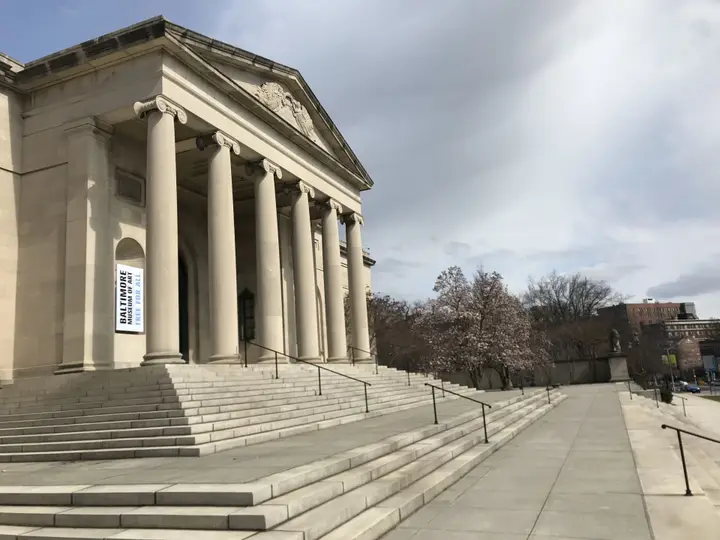
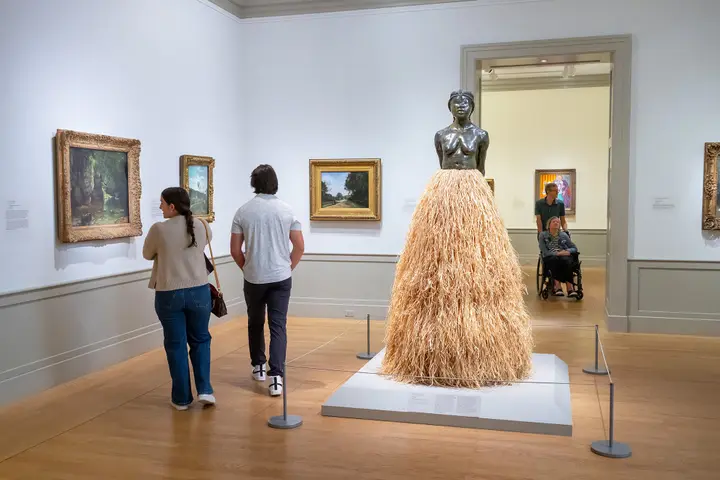
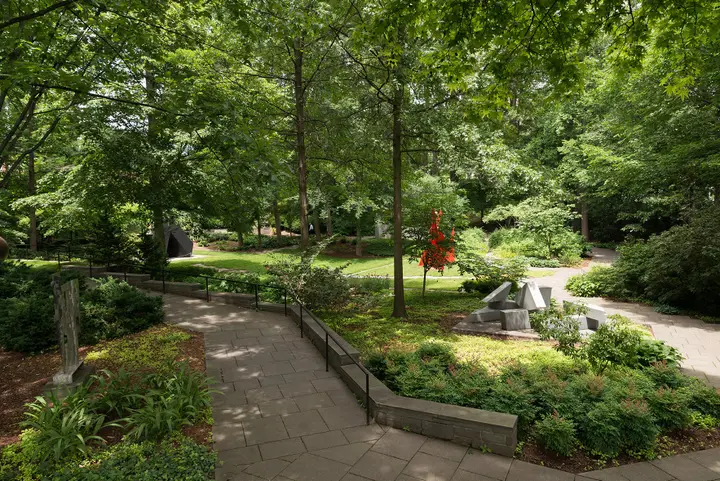
Photo credits
The neoclassical Baltimore Museum of Art on Art Museum Drive, its stone facade and columns seen from outside.: Eli Pousson (Baltimore Heritage) · CC0
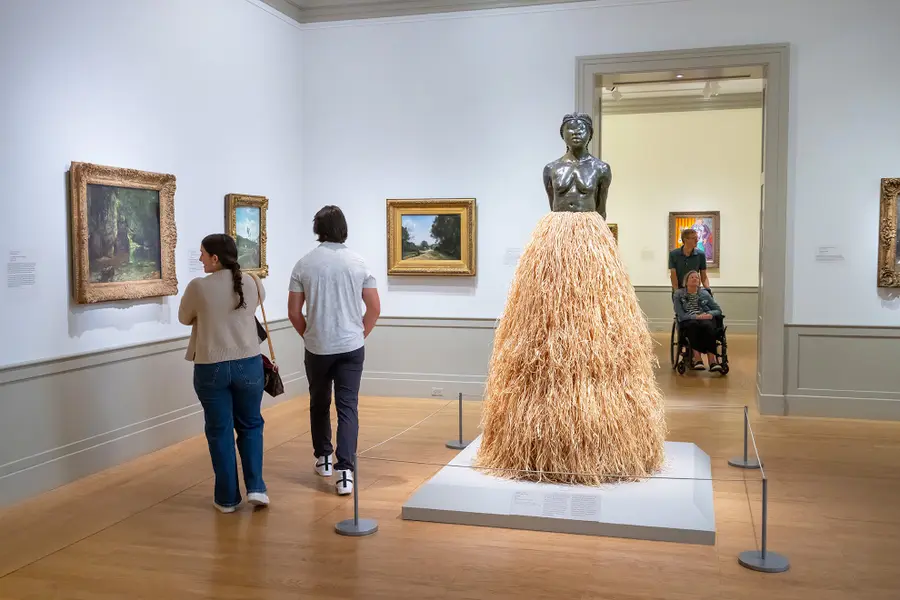
Visitors looking at paintings and sculptures in a gallery during an event at the Baltimore Museum of Art.: Baltimore Museum of Art
The landscaped Sculpture Garden beside the Baltimore Museum of Art with works of 20th-century sculpture.: Baltimore Museum of Art
Read reviews on Google Maps We don't show ratings here. See what visitors say on Google Maps.
Frequently asked questions
Is the Baltimore Museum of Art free?
General admission is always free, but reserve a free ticket online or at the Welcome Desk before entering the galleries. Special exhibitions require a separate ticket.
What time does the Baltimore Museum of Art open and close?
The galleries and shop open at 10:00 and close at 17:00 Wednesday to Sunday, and at 21:00 on Thursday; the museum is closed Monday and Tuesday. The Sculpture Gardens close at dusk. Evening concerts in the Meyerhoff Auditorium start at about 18:30 or 20:45 and a matinee at 16:00; the end time varies by programme, so check the event page before you travel.
Where do I park at the BMA?
Parking is free for up to 30 minutes in the East and West lots at 10 Art Museum Drive, then $12 during the day or $9 in the evening. The JHU South Garage on Wyman Park Drive and metered spaces on Art Museum Drive are alternatives.
Can I take a backpack or a large bag inside?
No. Backpacks, diaper bags, packages, laptops and anything larger than 11 by 15 inches must be checked in the Checkroom. Locker space is limited, and oversized luggage goes into storage areas that are not locked or supervised.
Can I eat or drink in the galleries?
No. Eating and drinking are not allowed in the galleries. There is a water fountain and bottle filler near the East Lobby restrooms, and free lockers where you can leave your bottle during your visit.
Does the museum have wheelchairs and accessible parking?
Yes. Manual wheelchairs are free at the Checkroom in the Segal East Lobby. Four accessible spaces sit outside the Zamoiski East Entrance, and if they are full, visitors with accessible tags can park in any BMA lot for free.
How long does a visit take?
There is no set time. The museum welcomes visitors for as little as 30 minutes or for a few hours, and with free admission you can come back to focus on one gallery or exhibition at a time.
Are the Sculpture Gardens open?
The Sculpture Gardens and Spring House are open from 10 a.m. to dusk, weather permitting, with no reservation needed. They may close during storms or in extreme heat or cold.
Is there a restaurant at the BMA?
Yes. Gertrude's Chesapeake Kitchen serves farm-fresh Chesapeake food with views of the Sculpture Garden, Wednesday to Saturday 11:30 a.m.–8 p.m. and Sunday 10 a.m.–3 p.m. and 4:30–7 p.m.
Can I take photos or sketch in the galleries?
Sketching in the collection galleries is allowed with pencil only, on paper up to 12 by 18 inches. Professional photography anywhere on museum property must be approved in advance.
Are strollers and baby carriers welcome?
Strollers are welcome throughout the museum. Soft front baby carriers may be worn, but back carriers and hard carriers are not permitted. Every restroom has a baby-changing station.
Do I need a ticket for an evening concert?
Yes. Concerts and performances in the Meyerhoff Auditorium are ticketed separately from free general admission. Check the event listing for its price and start time; the museum does not publish a standard end time.
Sources: Wikipedia: Baltimore Museum of Art (November 21, 2026) · Official BMA accessibility page (November 21, 2026) · Official BMA directions & parking page (November 21, 2026) · Official BMA shopping & dining page (November 21, 2026) · Official BMA FAQ (November 21, 2026)


