Musée d'arts de Nantes in Nantes
The Musée d'arts de Nantes shows more than 900 works in a landmark 1893 palace on rue Georges Clemenceau, rebuilt in 2017 into 17,000 m² of galleries and an Oratory chapel.
Photo credits
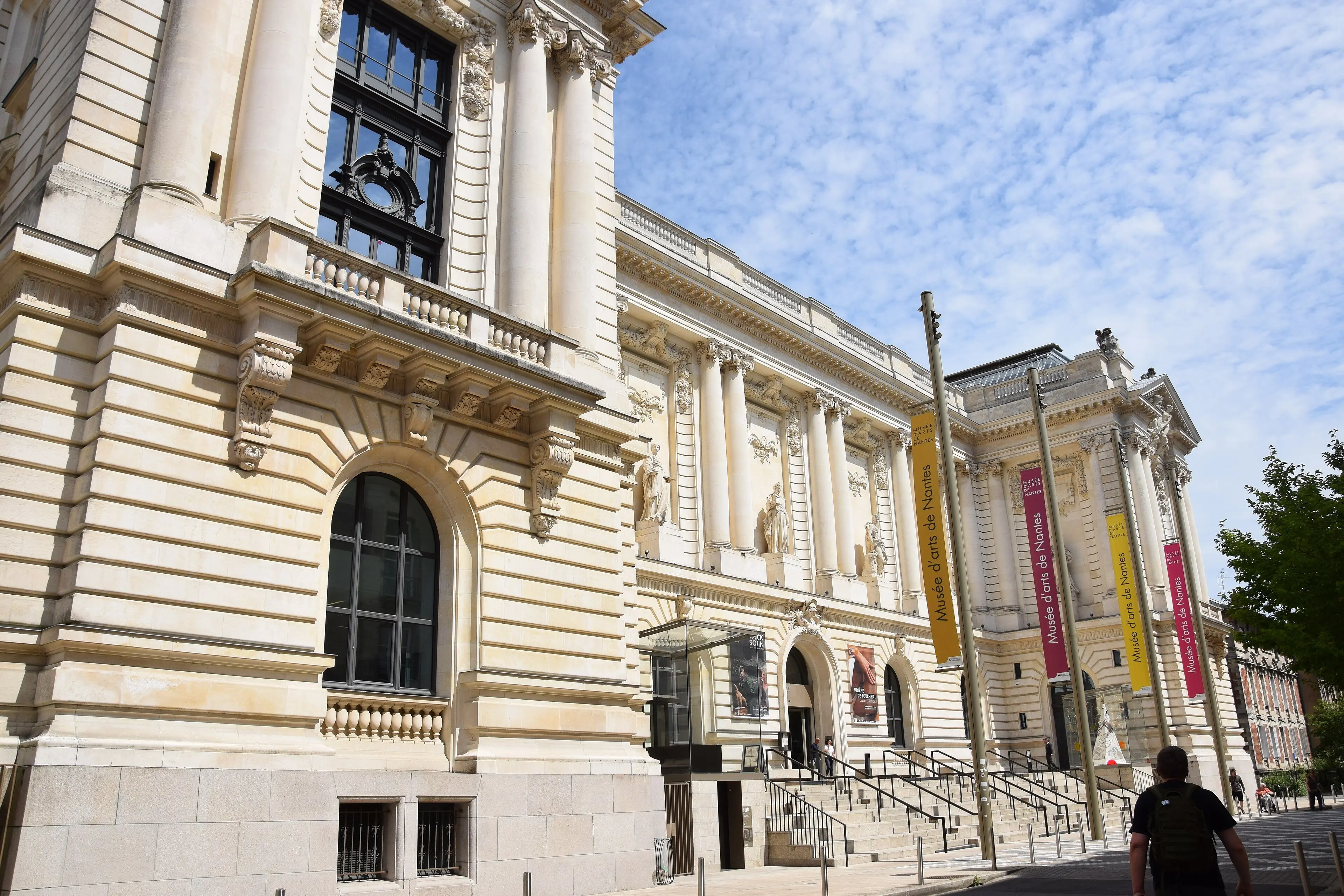
The monumental façade of the Musée d'arts de Nantes on rue Georges Clemenceau, photographed in 2024: Chatsam · CC BY-SA 4.0
Quick answers
- Collection
- More than 900 works on display
- Address
- 10 rue Georges Clemenceau Nantes44000 Nantes
- Building
- 17,000 m² since the 2017 rebuild
- Nearest stop
- Trébuchet, buses 11 and 12
- From the main station
- Bus 11 or 12 to Trébuchet
- Free entry
- First Sunday of every month
- Café
- Café-restaurant inside the museum
Holidays at Musée d'arts de Nantes
Open on the holidays: these nights are in the agenda.
- ChristmasNatural curiosity (5/7 years)
- ChristmasLa fabrique des dieux (ages 8–11)
Musée d'arts de Nantes agenda: upcoming events
Tonight, this week and the months ahead at this venue in Nantes.
Last night at Musée d'arts de Nantes: Exposition Plants and People - au Musée d’arts de Nantes
January 2027


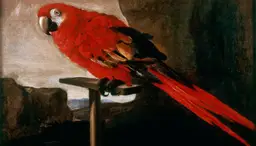


February 2027
- Thu4Feb
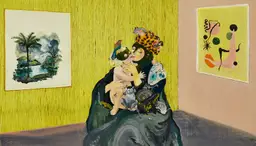
Plan your visit to Musée d'arts de Nantes
How big is the Musée d'arts de Nantes?
The museum does not publish a visitor capacity for its galleries. The figure people compare is the floor area of the building: 17,000 m² after the 2017 rebuild, up from 11,400 m².
That area makes it one of the larger regional fine-art museums in France, but it is not an arena: the auditorium inside the rebuilt patio seats an audience, while the galleries are designed for a steady flow of visitors rather than a fixed headcount.
For scale, the nearby Le Lieu Unique arts centre holds about 4,000 people for events and the Stade Marcel Saupin 1,880. Those are event and stadium capacities, not museum gallery limits, so they are only a rough guide.
| Venue | Figure | What it measures | Source |
|---|---|---|---|
| Musée d'arts de Nantes | 17,000 m²; visitor capacity not published | Floor area of the whole building | Wikipedia (English) |
| Le Lieu Unique | 4,000 | Event capacity, 0.5 km away | Wikidata / OpenStreetMap |
| Stade Marcel Saupin | 1,880 | Stadium capacity, 1.0 km away | Wikidata / OpenStreetMap |
| Stade de la Beaujoire | 35,322 | Stadium capacity, 4.4 km away | Wikipedia (French) |
Tickets, food and a visit to the museum
The permanent collection can be visited on its own; the talks, workshops and nocturnes in the agenda are separate activities with their own times.
The 2017 renovation renewed the librairie-boutique and the café-restaurant, so you can browse books or have a meal without leaving the building. The café is also a popular stop for people visiting the nearby château and cathedral.
Entry to the museum is free on the first Sunday of every month. For exhibitions and events, the agenda and ticket shop are on the museum's official website.
Most daytime activities in the agenda begin around 10:15 or 14:00; curator talks and conferences usually start at 17:00 or 18:15. Family workshops are short, so a 14:00 session typically finishes around 15:00-16:00, while an evening talk ends around 19:30.
- Free entry
- First Sunday of each month
- Café
- Café-restaurant, renovated in 2017
- Bookshop
- Librairie-boutique inside the museum
- Typical daytime start
- 10:15 or 14:00
- Typical evening start
- 17:00 or 18:15
Accessibility at the Musée d'arts de Nantes
The 2017 rebuild was carried out so that the building meets international standards for presenting and conserving art and for access.
Access throughout the palace was improved in the project, which also created four teaching rooms and a glazed link between the old building and the Cube. Since the renovation the Oratory chapel is reached from inside the museum rather than from rue Gambetta.
The agenda includes a descriptive and tactile visit, which shows that staff can support visitors who need an alternative way through the collection. Contact the museum before your visit to arrange assistance.
- Improved access
- Across the building in the 2017 rebuild
- Chapel access
- From inside the museum since 2017
- Support
- Descriptive and tactile visits are offered
Getting to the Musée d'arts de Nantes
Buses 11 and 12 serve the museum via the Trébuchet stop. From Nantes station, the city's main railway station, take either line to Trébuchet.
The museum is in the city centre, close to the château, the cathedral and the cours Saint-André and Saint-Pierre, so arriving by bus and walking on to the old town is straightforward.
Jules-Dupré course, a paved lane closed to through traffic, runs along the west side of the museum between rue Georges Clemenceau and rue Gambetta.
Parking near the Musée d'arts de Nantes
The museum is on a busy city-centre street. Metered on-street parking is available along rue Georges Clemenceau; the city sets the rate. Buses 11 and 12 serve the museum via the Trébuchet stop.
The rebuild replaced the railings in front of the palace with a broad open forecourt, so setting down passengers at the door is easier than it was before 2017.
| Car park | Address | Walk | Rate |
|---|---|---|---|
| On-street parking in rue Georges Clemenceau | 10 rue Georges Clemenceau, 44000 Nantes | At the entrance | Metered; rate set by the city |
Official links
About the Musée d'arts de Nantes
The Musée d'arts de Nantes is Nantes' fine-art museum, created by decree in 1801 and open in its present palace since 1900. The building's façade, roof and monumental staircase have been listed historical monuments since 1975.
Its galleries hold paintings, sculpture, photographs, video and installations from the 13th century to today. The Cacault brothers' collection, bought by the city in 1810, is the heart of the museum: an 1818 inventory already counted 1,155 paintings and 64 sculptures in it.
After a long closure the whole museum reopened on 23 June 2017. The enlargement created 2,500 m² of extra exhibition space, a patio auditorium and a new wing called the Cube for contemporary art.
- Founded
- 1801
- Reopened
- 23 June 2017
- Architect of the palace
- Clément Josso
- Rebuild architect
- Stanton Williams
- Listed since
- 29 October 1975
What is in the collection?
More than 900 paintings, sculptures, photographs, videos and installations are on display, from medieval altarpieces to contemporary art.
The museum surveys the main French and European schools. Among the old masters are Rubens, Georges de La Tour, Perugino, Tintoretto and Watteau; the 19th and 20th centuries bring together Courbet, Monet, Renoir, Delacroix, Gauguin's contemporaries, Kandinsky, Picasso and Dubuffet.
The collection is unusually strong in Italian primitives and in French art because the city bought the Cacault brothers' holdings in 1810. Works from the Regional Contemporary Art Fund and the Centre Pompidou are shown alongside them, and the print cabinet holds a further 15,000 works.
Displays are arranged so that older and modern works speak to each other rather than following a strictly chronological route.
- Works on display
- More than 900
- Print cabinet
- 15,000 works
- Cacault purchase
- 1810
- Range
- 13th century to the present
A short history of the museum
The museum was founded in 1801, when Napoleonic consular decrees created a dozen provincial museums. It first occupied the Halle aux Toiles; in 1891 the city decided to build a dedicated palace beside the botanical garden, and the architect Clément Josso won the competition.
The palace opened in 1900, built around a glass-roofed central court with galleries on two levels and a monumental double staircase. The Cacault collection, bought in 1810, had already made it one of the richest painting collections outside Paris.
By the 2000s the building was too small and no longer met modern conservation standards. Stanton Williams won an international competition in 2009; the museum closed in December 2011 and, after groundwater problems extended the work, reopened across all its spaces on 23 June 2017.
- First home
- Halle aux Toiles
- Palace decided
- 1891
- Competition won
- 2009
- Closed for work
- 18 December 2011
Photos
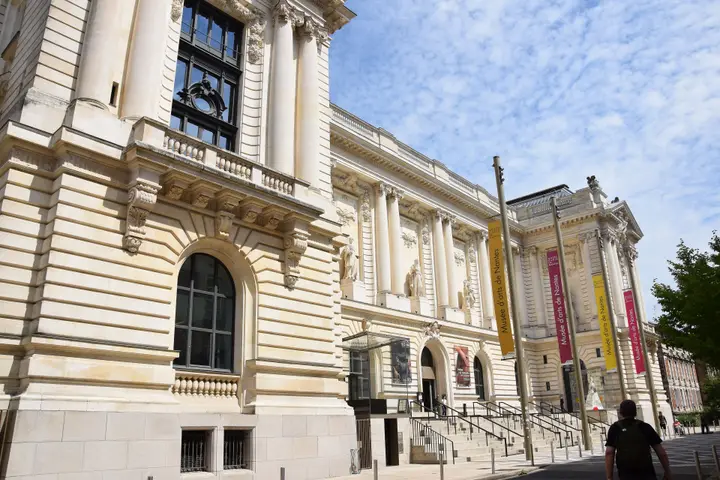
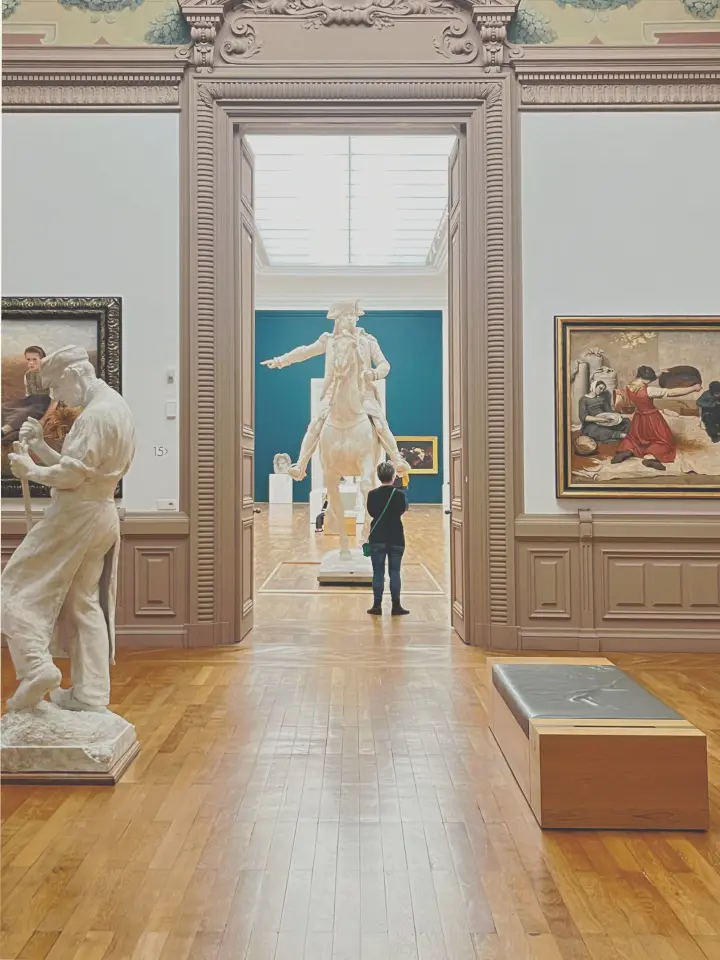
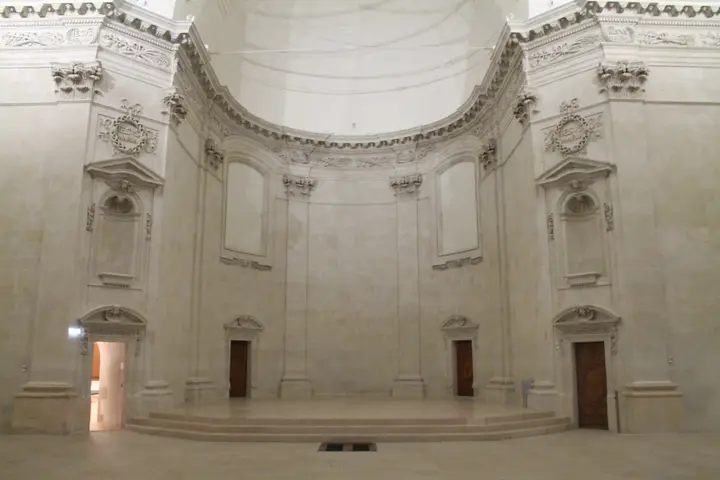
Photo credits
The monumental façade of the Musée d'arts de Nantes on rue Georges Clemenceau, photographed in 2024: Chatsam · CC BY-SA 4.0
An interior gallery of the Musée d'arts de Nantes with paintings hung in the restored historic rooms: Benoît Prieur · CC0
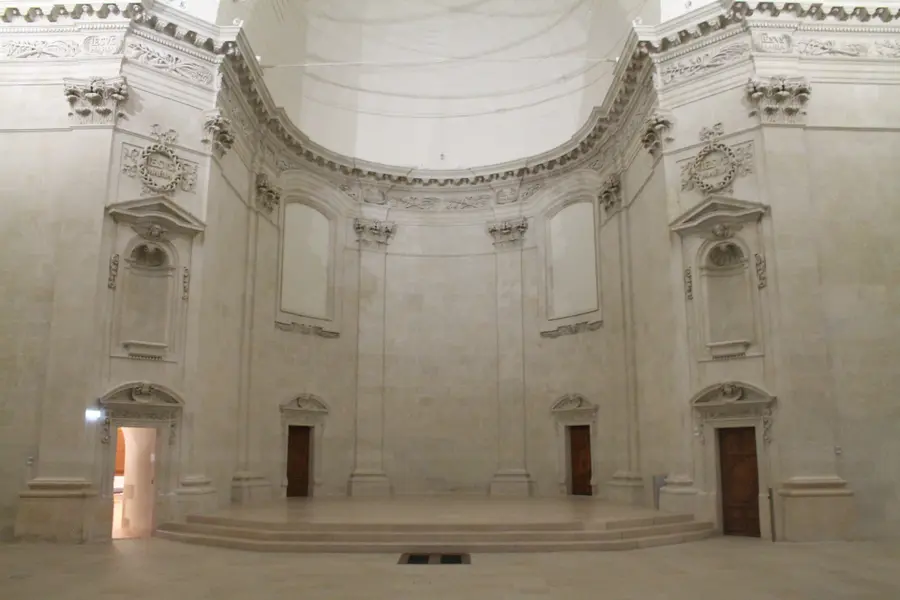
The Oratory chapel of the Musée d'arts de Nantes, used for exhibitions and reached from inside the museum: Koreller · CC BY-SA 4.0
Read reviews on Google Maps We don't show ratings here. See what visitors say on Google Maps.
Frequently asked questions
Where is the Musée d'arts de Nantes?
It is at 10 rue Georges Clemenceau, 44000 Nantes, in the city centre near the château and the cathedral. Buses 11 and 12 stop at Trébuchet on the same street.
How do I get there from Nantes station?
Nantes station is the city's main railway station. Take bus 11 or 12 towards Trébuchet, the stop that serves the museum.
When did the museum reopen after the renovation?
The whole museum reopened on 23 June 2017 after closing in December 2011. The project enlarged the building from 11,400 m² to 17,000 m² and added the Cube wing.
How many works are in the collection?
More than 900 paintings, sculptures, photographs, videos and installations are on display, spanning the 13th century to contemporary art. The print cabinet holds a further 15,000 works.
Is entry to the Musée d'arts de Nantes free?
The museum opens its doors free of charge on the first Sunday of every month. Other days and special exhibitions use the ticket shop on the official website.
What time do events at the museum start and end?
Most daytime activities start at 10:15 or 14:00 and talks and conferences at 17:00 or 18:15. Family workshops last about an hour, so a 14:00 session usually ends around 15:00-16:00 and an 18:15 talk around 19:30.
Is there a café or somewhere to eat?
Yes. The 2017 renovation renewed the café-restaurant and the librairie-boutique inside the museum, so you can have a meal or a coffee during your visit without leaving the building.
Is the museum good for children?
The agenda has regular family activities with ages printed in their titles, from 2-4 year olds to 8-11 year olds, including drawing, storytelling and hands-on workshops. Check the age on each event before you book.
Is the museum accessible for wheelchair users?
Access across the building was improved in the 2017 rebuild, and the Oratory chapel has been reachable from inside the museum since then. Descriptive and tactile visits are offered; contact the museum ahead of your visit to arrange help.
How many people visit the museum each year?
Attendance is in the hundreds of thousands: 298,776 visitors were recorded in 2019 and 422,328 in 2023, according to figures published on Wikipedia.
What is the Oratory chapel used for?
The Chapelle de l'Oratoire is part of the museum and serves as a space for temporary exhibitions. Since the 2017 renovation it is entered from inside the museum instead of from rue Gambetta.
Can I park at the museum?
There is metered on-street parking along rue Georges Clemenceau, with the rate set by the city. As the museum is in the centre and served by buses 11 and 12 at Trébuchet, public transport is the easier option.
What famous artists can I see here?
The collection includes Rubens, Georges de La Tour, Perugino, Watteau, Courbet, Delacroix, Monet, Renoir, Kandinsky, Picasso and Dubuffet, among many others.
Sources: Wikipedia and the venue's Evenitto agenda (November 19, 2026) · Musée d'arts de Nantes, Wikipedia (French) (November 19, 2026) · OpenStreetMap area data and Wikipedia (November 19, 2026) · Musée d'arts de Nantes, situation et accès (Wikipedia, French) (November 19, 2026)