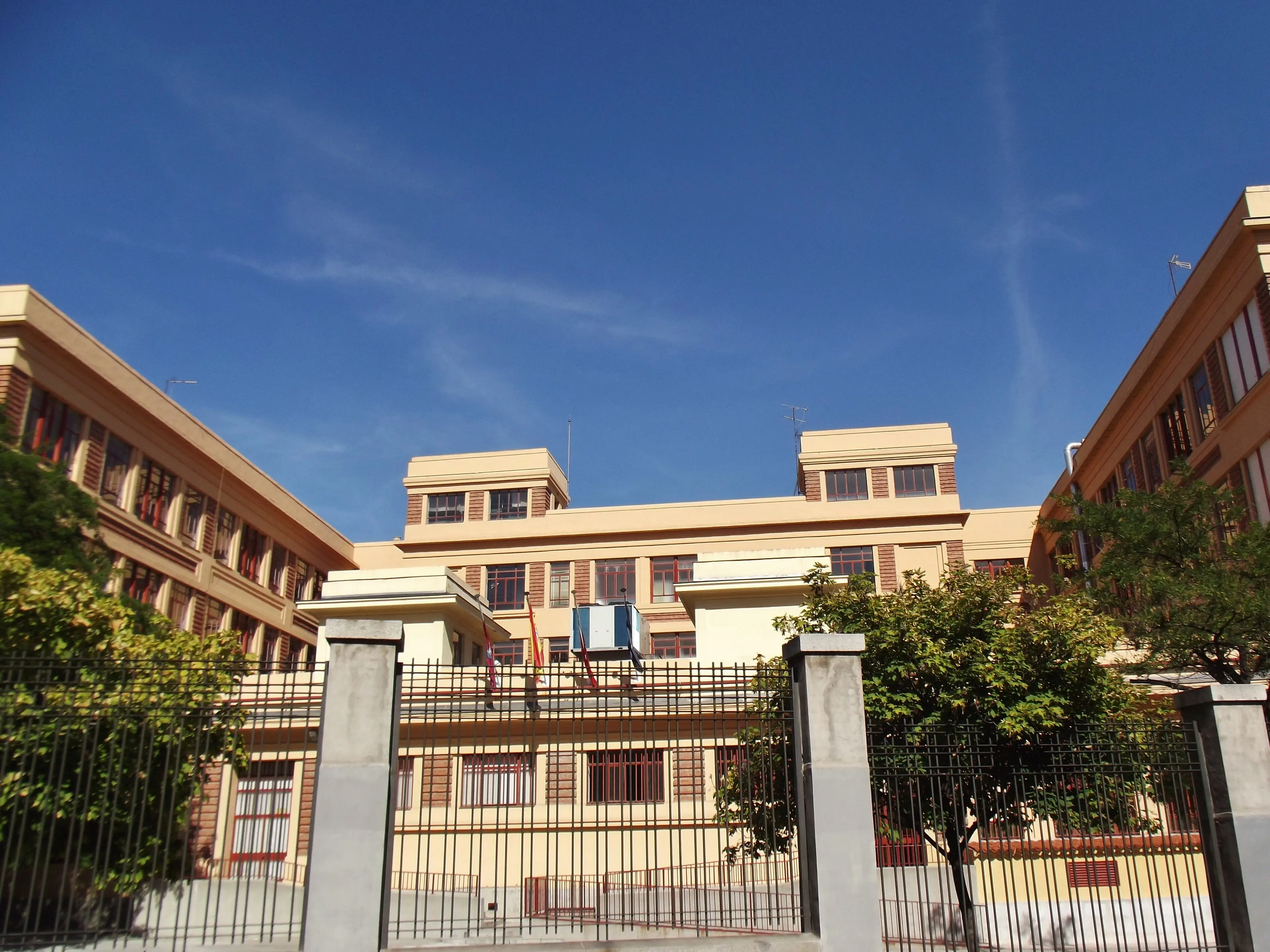
Centro Cultural Nicolás Salmerón (Chamartín) in Madrid
A municipal cultural centre in Chamartín with a 234-seat auditorium, free talks, music and children's workshops, a glass-covered patio and metro line 9 nearby.
Photo credits
The former school building of the Centro Cultural Nicolás Salmerón in Madrid, seen from the street.: Asqueladd · CC BY-SA 3.0
Quick answers
- Auditorium
- 234 seats, the only published capacity
- Address
- Calle Mantuano, 5128002 Madrid
- Address
- Calle de Mantuano 51, Chamartín, Madrid
- Space
- 7000 m² of useful floor area
- Programme
- Free talks, music, theatre and films
- Nearest metro
- Concha Espina, line 9, about 7 min
- Main station
- Chamartín, about 40 min on foot
- Parking
- Corazón de María garage, about 14 min
Holidays at Centro Cultural Nicolás Salmerón (Chamartín)
Open on the holidays: these nights are in the agenda.
- ChristmasChildren's Workshop: Christmas Bookmarks
- ChristmasVisit from Papá Noel
- ChristmasChildren's Workshop: Christmas Bookmarks
- ChristmasFamily Theatre: Salvemos la Navidad
- ChristmasChildren's Workshop: Giant Snowflakes
- ChristmasChildren's Workshop: Giant Snowflakes
- ChristmasMagic and Humor: Madame Blablasky/ La Maga de la Navidad
- New Year's EveChildren's Workshop: My Gingerbread Man
Centro Cultural Nicolás Salmerón (Chamartín) agenda: upcoming events
Tonight, this week and the months ahead at this venue in Madrid.
Last night at Centro Cultural Nicolás Salmerón (Chamartín): Lecture: Pedro Pablo Rubens and Baroque Exuberance
December 2026
- Sun20DecChildren's Workshop: Christmas Wreath for the Door8 shows:Sun 20 Dec 11:30Sun 20 Dec 12:30Wed 23 Dec 11:30Wed 23 Dec 12:30Thu 24 Dec 11:30Thu 24 Dec 12:30Sat 26 Dec 11:30Sat 26 Dec 12:30Free
- Sun20Dec
- Wed23DecFree
- Thu24DecFree
- Thu24DecFree
Plan your visit to Centro Cultural Nicolás Salmerón (Chamartín)
How many people fit in the Centro Cultural Nicolás Salmerón?
- Main auditorium
- 234 seated places, the published official capacity
- Whole building
- No total capacity published
- Comparable hall
- Teatro de La Abadía, about 504 seats
The main auditorium has an official capacity of 234 seated people. The centre does not publish a capacity for the whole building, so this is the hall only: the classrooms, patio and exhibition rooms are separate spaces and should not be added to the figure.
For scale, the Teatro de La Abadía in central Madrid seats about 504. The Estadio Chamartín site 1.0 km away held about 22,500 people and the Santiago Bernabéu about 83,186, but those are stadiums rather than cultural-centre halls.
| Venue | Capacity | Source |
|---|---|---|
| Centro Cultural Nicolás Salmerón, auditorium | 234 seated | Wikipedia, citing Madrid City Council |
| Teatro de La Abadía, Madrid | About 504 | Wikidata, via OpenStreetMap area data |
| Estadio Chamartín, Madrid | About 22,500 (1.0 km away) | Wikidata, via OpenStreetMap area data |
| Santiago Bernabéu, Madrid | About 83,186 (1.2 km away) | Wikidata, via OpenStreetMap area data |
Seating in the auditorium: what to know before you book
The hall is a single enclosed room used for theatre, recitals and film forums.
Hall
One enclosed room with 234 seats
Seat map
Set per production; check your ticket seller's map
Uses
Theatre, recitals, cinema forums and children's shows
There are 234 seats in the main hall. The centre does not publish a numbered seat map of the building: the organiser sets the layout for each production, so use the seat map shown by the seller of your ticket. A seat towards the middle of the room gives the most direct view of the stage; the ends of the front rows usually look across at an angle.
Children's theatre, storytelling and workshops make up much of the current programme. Check the individual event page for the door time and whether the show is seated or uses the open patio.
Getting to the centre: metro, bus and train
Concha Espina on metro line 9 is the nearest station, about 338 metres from the building.
Several EMT bus stops are within a few minutes' walk. Wikipedia's Concha Espina station article lists lines 43 and 120 at the Parque de Berlín stop and lines 7, 16, 19, 29, 52 and the N1 night service at Plaza de Cataluña. The stop beside the Auditorio Nacional is another option.
The main railway station is Madrid-Chamartín-Clara Campoamor, about 2.7 km away: roughly 40 minutes on foot, or use metro lines 1 and 10 and continue by bus. Check the current Metro de Madrid or EMT planner for the last service after an evening event.
Parking near Calle de Mantuano
The centre has no visitor car park of its own; several public car parks lie within 15–20 minutes' walk.
OpenStreetMap lists underground car parks around the building, with addresses checked against OpenStreetMap's Nominatim geocoder. None of the pages read gave a current tariff, so the rate column says 'not published' instead of guessing a price. Check the signs at each garage before parking, and leave time for the walk back to Mantuano.
| Car park | Address | Walk | Rate |
|---|---|---|---|
| Corazón de María | Calle del Corazón de María, 28002 | about 14 min | Not published |
| Parking Condes del Val | Paseo de La Habana, 28016 | about 15 min | Not published |
| Bernabéu Silos 6 | Avenida de Concha Espina, 28020 | about 15 min | Not published |
| El Viso | Calle de María Malibrán, 28020 | about 16 min | Not published |
| Parking Mercado de Chamartín | Entrada parking mercado de Chamartín, 28016 | about 16 min | Not published |
| Garaje Víctor de la Serna 39 | Calle de Víctor de la Serna 39, 28016 | about 16 min | Not published |
| Garaje Alcocer 43 | Avenida de Alberto Alcocer, 28016 | about 19 min | Not published |
The rooms: auditorium, 20 classrooms, glass patio and library
The complex has 7000 m² of useful floor area and several independent spaces.
- Auditorium
- Enclosed hall with an official capacity of 234 seats
- Classrooms
- 20 rooms for theoretical and practical workshops
- Exhibition rooms
- Independent spaces for temporary art shows
- Patio Acristalado
- Covered inner courtyard beside the hall, used for Christmas, Carnival and Halloween events
- Cafetería
- A café is part of the complex
- Library
- Francisco Ibáñez municipal library
- Music school
- María Rodrigo municipal music school
- Older people's centre
- Nicolás Salmerón municipal centre
Official links
More from Centro Cultural Nicolás Salmerón (Chamartín)
About the Centro Cultural Nicolás Salmerón
The Centro Cultural Nicolás Salmerón is a municipal cultural centre at Calle de Mantuano 51 in Ciudad Jardín, Chamartín, Madrid. Run by Madrid City Council through the Chamartín district board, it was officially opened on 12 November 1983 by the then mayor, Enrique Tierno Galván, and has 7000 square metres of useful space for workshops, performances and exhibitions.
The building started as the Nicolás Salmerón school group, designed and built in 1931–1932 by the architect Bernardo Giner de los Ríos as one of eighteen schools in the First Republic's first school-building programme. Its rationalist façades face the streets of Mantuano, Pradillo and Vinaroz. After serving as a Falange officers' academy and later a teacher-training school, it returned to the city council in 1979 and became a cultural centre.
Three separate district services share the complex: the Francisco Ibáñez municipal library, the María Rodrigo municipal music school and the Nicolás Salmerón municipal centre for older people. Its exhibition rooms are also the regular home of the Spanish Association of Painters and Sculptors' national Drawing, Engraving and Illustration Salon.
- Opened
- 12 November 1983, by mayor Enrique Tierno Galván
- Run by
- Madrid City Council, Chamartín district board
- Building
- Former Nicolás Salmerón school group, 1931–1932
- Floor area
- 7000 m² of useful space
What's on: the free programme, workshops and the drawing salon
Year-round free activity cycles are programmed for the district, coordinated with city schemes such as CiudaDistrito and 21 Distritos.
From a Second Republic school to a landmark of La Movida
The building was designed and built between 1931 and 1932 by Bernardo Giner de los Ríos as a school group, one of eighteen schools in the first school-building plan of Spain's Second Republic. After the Civil War it became the Academia Nacional de Mandos José Antonio and later a teacher-training school. The city council took it back in 1979 and formally opened the cultural centre on 12 November 1983.
In the late 1970s students and neighbourhood groups occupied the empty building as the Ateneo de Prosperidad. Bands including Kaka de Luxe, Los Zombies, Paraíso and Tos rehearsed and played in its rooms, making it one of the centres of La Movida madrileña. Fernando Colomo filmed a rock performance in the auditorium in 1978, and Pedro Almodóvar filmed musical scenes for his first feature, Pepi, Luci, Bom y otras chicas del montón, in the same hall in 1980.
- Opened as a centre
- 12 November 1983
- School building
- Designed and built in 1931–1932
- Architect
- Bernardo Giner de los Ríos
- Film location
- Used by Fernando Colomo in 1978 and Pedro Almodóvar in 1980
Photos
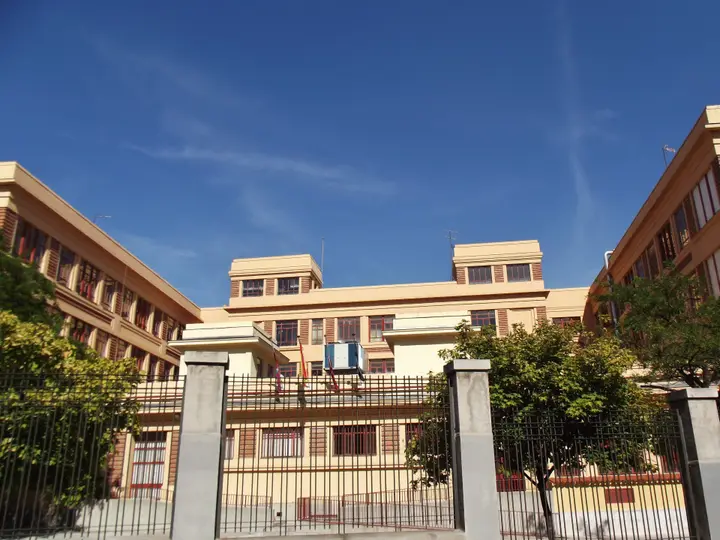
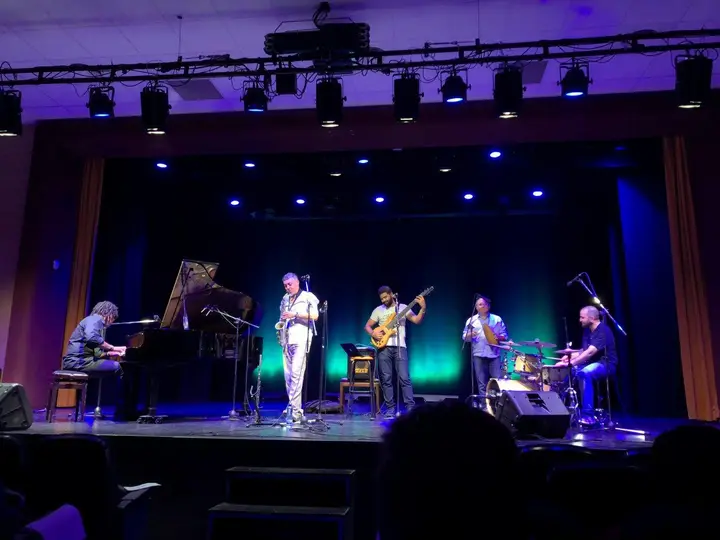
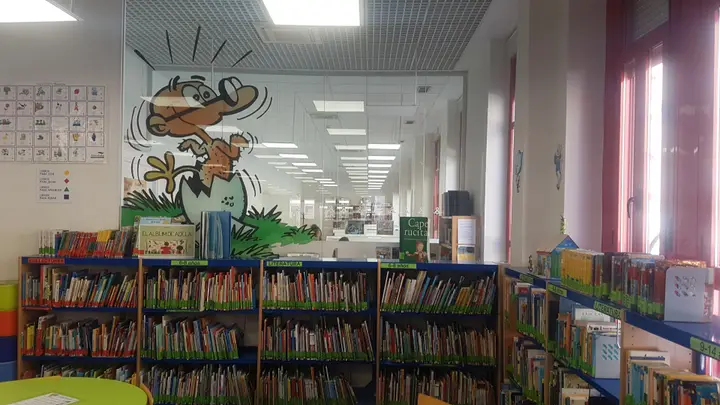
Photo credits
The former school building of the Centro Cultural Nicolás Salmerón in Madrid, seen from the street.: Asqueladd · CC BY-SA 3.0
The Cuban art exhibition in the rooms of the Centro Cultural Nicolás Salmerón in Chamartín.: Diario de Madrid · CC BY 4.0
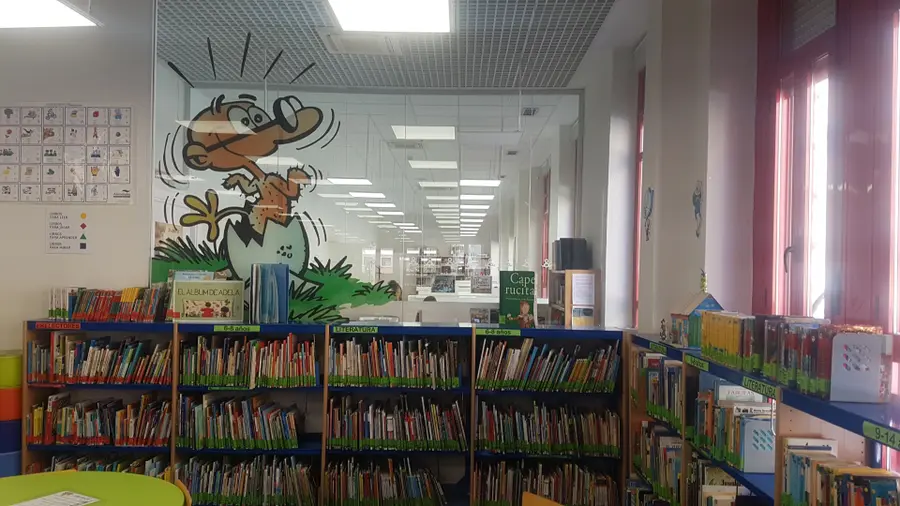
The children's reading room of the Francisco Ibáñez municipal library inside the cultural centre complex.: Romifj · CC BY-SA 4.0
Read reviews on Google Maps We don't show ratings here. See what visitors say on Google Maps.
Questions people ask about the Centro Cultural Nicolás Salmerón
What time do events start and finish at the Centro Cultural Nicolás Salmerón?
In the current agenda, afternoon events start at 16:00, evening events at 18:00, and children's workshops are listed at 10:30 and 11:30. The centre does not publish finishing times; they vary by event, so check the individual listing before you travel.
How many people fit in the auditorium?
The main hall has an official capacity of 234 seated people. The centre does not publish a total capacity for the whole complex.
What is the address of the Centro Cultural Nicolás Salmerón?
Calle de Mantuano 51, 28002 Madrid, in the Ciudad Jardín neighbourhood of the Chamartín district.
Which metro line serves the centre?
Concha Espina station on line 9 is the nearest, about 338 metres or a seven-minute walk from the building.
Which buses stop near the centre?
Lines 43 and 120 stop at Parque de Berlín; lines 7, 16, 19, 29 and 52 and the N1 night bus stop at Plaza de Cataluña. There is also a stop by the Auditorio Nacional.
How far is it from Chamartín station?
Madrid-Chamartín-Clara Campoamor is about 2.7 km away, roughly 40 minutes on foot. Trains, Cercanías and metro lines 1 and 10 serve the station.
Can I park at the centre?
There is no dedicated visitor car park. Public garages such as Corazón de María and Parking Condes del Val are about 14–15 minutes' walk away; the pages read did not publish their rates.
Is the programme free?
The centre's regular annual cycles of activities are described as free and aimed at the district. Check the individual listing, because some special productions may need a ticket.
What is inside the building?
A 234-seat auditorium, 20 training classrooms, exhibition rooms, a glass-covered patio, a café, and the Francisco Ibáñez library, María Rodrigo music school and Nicolás Salmerón centre for older people.
Is the Francisco Ibáñez library in the same building?
Yes. The Biblioteca Pública Municipal Francisco Ibáñez is one of three separate district services housed inside the complex.
What is the Salón de Dibujo, Grabado e Ilustración?
It is a national drawing, engraving and illustration competition run with the Asociación Española de Pintores y Escultores. The exhibitions are held in the centre's rooms; the association first staged the salon in 2016.
Who runs the centre?
Madrid City Council runs it through the Junta Municipal del Distrito de Chamartín. The building was a school before the council opened it as a cultural centre in 1983.
Sources: Wikipedia — visitor information and programme (November 24, 2026) · Wikipedia — Estación de Concha Espina (November 24, 2026) · OpenStreetMap and Nominatim (November 24, 2026)


